How mold remediation works
Mold remediation works in 6 steps: assessment, containment, HEPA air filtration, removal of affected materials, drying with moisture-source repair, and verification. Call (856) 595-8837 and a support manager books a time, then a local specialist from our network gives the estimate on the call. This guide explains each step, how long jobs run and what a finished mold job proves.
- One call, no forms to fill out
- Support manager available 24/7 to confirm your booking time
- A specialist contacts you quickly, sometimes the same day
- Free estimate and inspection, given on the call
- Independent clearance testing available
Speak to a support manager · confirm a booking time · get the estimate on the specialist's call
No name, phone or email needed. We count anonymous answers, never contact details, to improve this page.
Call (856) 595-8837. A support manager confirms a booking time, and a local specialist gives the estimate on the call.
Mold Remediation Co. is a referral service. We connect you by phone with independent local mold remediation companies, and their technicians perform the work. We are not a contractor.
What is mold remediation?
Mold remediation is the cleanup of indoor mold combined with repair of the moisture that fed it. The work runs through assessment, containment, filtration, removal, drying and verification. EPA states that cleanup without fixing the water problem lets the mold return.
Professional remediation differs from wiping a wall. Each step controls one risk: spores spreading to clean rooms, wet materials staying wet, or a finished area that was never checked. EPA lists the 10 square feet (about 3 ft by 3 ft) line as the point where homeowner cleanup ends and professional help, or EPA's guide for larger buildings, takes over.
What happens in each of the 6 steps of mold remediation?
Mold remediation has 6 steps: assessment, containment, HEPA air filtration, removal of affected materials, drying with repair of the moisture source, and verification. Each step has one job, and skipping the moisture repair or the final check is where jobs fail.
- Assessment: the specialist maps visible growth, takes moisture readings and finds the water source.
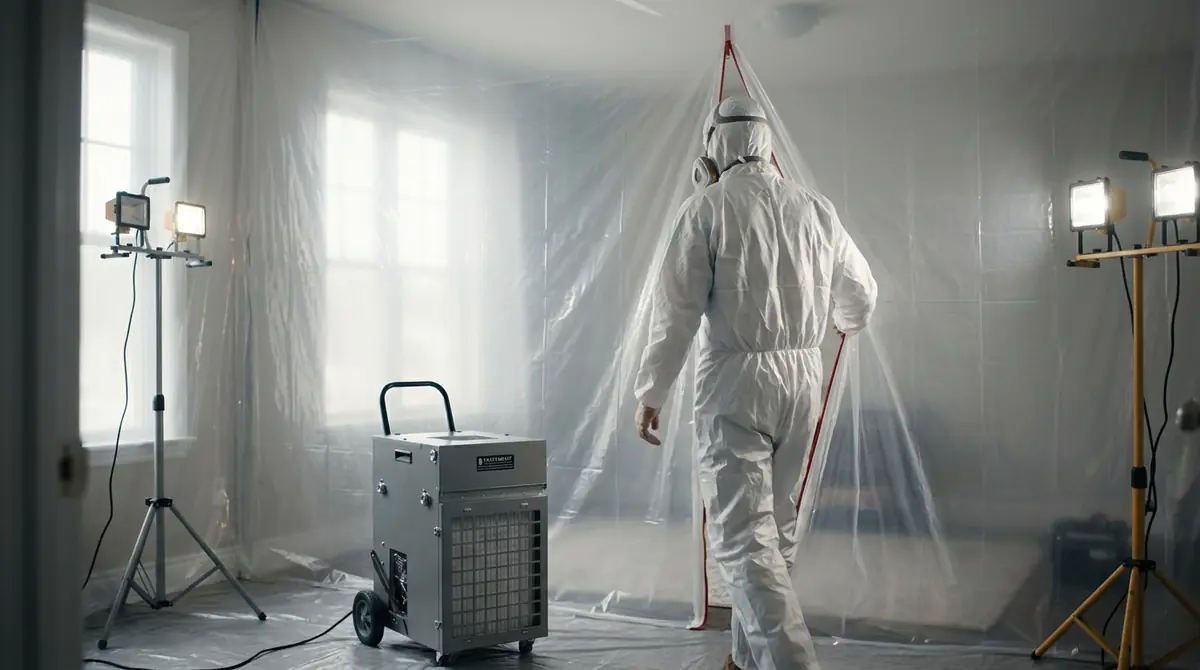
- Containment: plastic sheeting isolates the work area so disturbed spores stay out of the rest of the house.
- HEPA air filtration: HEPA machines filter the air in the work area, and HEPA vacuums clean surfaces once materials are dry and removed.
- Removal: porous materials that mold has filled come out in sealed bags; hard, non-porous surfaces are scrubbed with detergent and water and dried completely.
- Drying and moisture repair: the leak, condensation point or drainage problem that fed the mold is fixed and the area is dried.
- Verification: a final check confirms that the cleaned area is dry and free of visible mold and moldy odor.
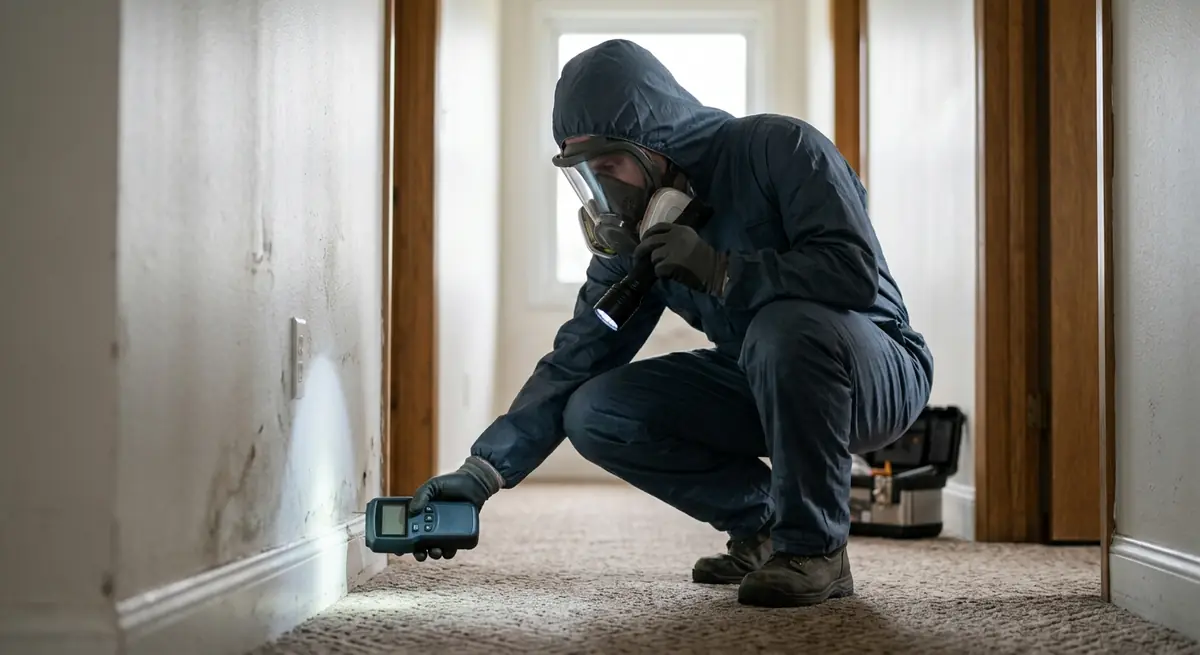
EPA names moisture and humidity meters as investigation tools, which is why the first visit takes readings before any drywall comes open.
How much containment does a mold job need?
Containment depends on the size of the growth: EPA recommends limited containment for 10 to 100 square feet and full containment above 100 square feet. Plastic sheeting and filtered air keep disturbed spores inside the work area while materials come out.
Limited containment
Limited containment covers 10 to 100 square feet. The specialist seals the work area with sheeting and runs HEPA filtration while the affected material is removed and surfaces are cleaned.
Full containment
Full containment applies above 100 square feet. The measured area from the assessment sets the size of the enclosure, so an accurate square-foot figure on the quote matters.
A mold remediation in Houston estimate, like one anywhere else, starts from that measured area. Homeowners weighing a smaller patch themselves can read removing mold yourself first.
Which materials get cleaned and which come out?
Porous materials that mold has filled come out in sealed bags, and hard, non-porous surfaces are scrubbed with detergent and water and dried completely. EPA's water-damage table lists wet insulation for discard. The quote names every item cleaned and every item replaced.
Removed
Moldy drywall is a removal item in EPA's water-damage table, and wet insulation is listed for discard and replacement. Removal happens inside containment, with the material bagged before it leaves the work area.
Cleaned
Hard surfaces such as metal, glass and sealed concrete are scrubbed with detergent and water and dried completely, per EPA's cleanup guidance.
Our guide to moldy building materials sorts each material into clean or remove, one by one.
How long does mold remediation take?
Contractor guides put small jobs at 1 to 2 days, 100 to 300 square feet at 3 to 5 days, and large jobs at 1 to 2 weeks. Drying is often the longest step, and lab clearance results add 1 to 3 days.
| Job size | Typical duration |
|---|---|
| Small area | 1 to 2 days |
| 100 to 300 square feet | 3 to 5 days |
| Large job | 1 to 2 weeks |
| Lab clearance results | Add 1 to 3 days |
| Failed clearance | Adds days for re-cleaning and a new check |
These ranges come from contractor blogs and are not a regulated standard. The specialist gives the schedule for your home on the estimate call.
What is the difference between mold removal and mold remediation?
Mold removal and mold remediation are industry terms, not regulated ones. Removal usually means surface cleaning, while remediation adds containment, moisture-source repair and clearance. Ask each company which steps its quote includes before you compare prices, because terms vary.
| Attribute | Mold removal | Mold remediation |
|---|---|---|
| Scope | Surface cleaning | Cleaning plus the whole sequence |
| Moisture source | Not always included | Repaired or handed to a plumber or roofer |
| Containment | Not always included | Sized to the affected area |
| Final check | Not always included | Clearance verification |
How do you know the remediation is finished?
EPA's signs of a finished cleanup are a fixed water problem, no visible mold or moldy odor, and indoor mold types and levels similar to outdoor air. A check by a company that did not do the work is the most useful.
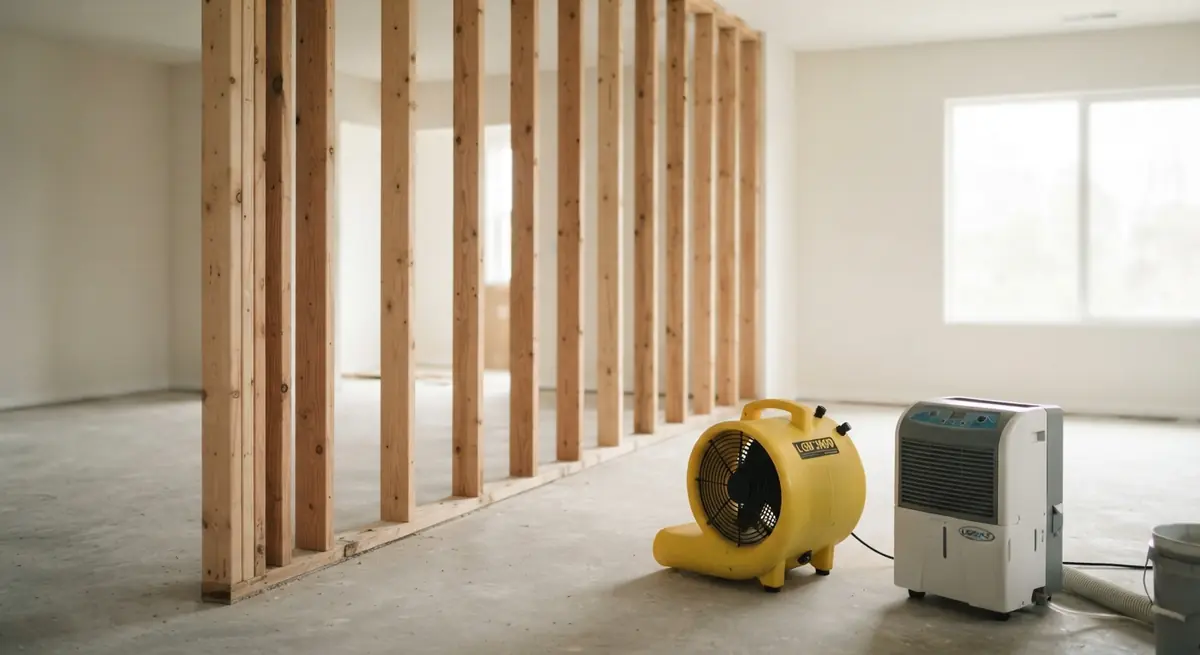
EPA calls the final decision a judgment call, so the pass criteria belong in the contract before work starts. Book the check while containment is still up, so a failed area is cleaned again inside the same enclosure. Our guide to post-remediation verification explains who performs the check and what a failed result means.
Where does the remediation process start for your home?
The process starts with one call to (856) 595-8837. A support manager books a time, a local specialist from our network gives the estimate on the call, and the 6 steps above are scoped to your home. Choose your city below.
The steps are the same everywhere, and the moisture drivers differ by city. Local pages cover climate, state rules and covered ZIP codes: see mold remediation in Miami or mold remediation in Dallas, and the full list on the home page.
How mold remediation works FAQ
Can you stay in the house during mold remediation?
Containment keeps spores inside the work area, and sealed sheeting separates it from the rest of the house. EPA advises seeing a health professional first for health concerns, and CDC lists asthma, mold allergy, immune compromise and chronic lung disease as higher risk.
Does mold remediation include fixing the leak?
Mold remediation includes repairing the moisture source, or coordinating with the plumber or roofer who does. EPA states that cleanup without fixing the water problem lets mold return. A quote that skips the moisture repair leaves the cause in place.
Is mold testing part of the remediation process?
Testing is not a required step. EPA calls sampling unnecessary in most cases where mold is visible, and CDC does not recommend mold testing. Sampling helps locate hidden growth behind a musty odor and confirm that a finished job passed.
Can bleach replace the remediation steps?
No. EPA's cleanup guidance for hard surfaces is scrubbing with detergent and water and drying completely, and it does not mention bleach. Porous materials that mold has filled still come out, and the water source still needs repair.
When do you need a professional instead of cleaning it yourself?
EPA marks about 10 square feet as the homeowner limit. Professional help is advised above that size, for sewage or contaminated water, for suspected HVAC contamination (do not run the system), and when health concerns exist.
Ready to start the 6 steps? Call (856) 595-8837. A support manager books your time, and a local specialist gives the estimate on the call.
Call (856) 595-8837