Mold Remediation in Homestead, FL
Mold remediation in Homestead, FL begins with a call to (856) 595-8837, where a support manager records the problem and books a time that suits you. A specialist from our network then reaches you quickly, sometimes the same day, with the estimate on that call. The job targets humid-air growth, flood and storm water, and AC drain leaks: containment, removal, drying and a clearance check.
- One call, no forms to fill out
- Support manager available 24/7 to confirm your booking time
- A specialist contacts you quickly, sometimes the same day
- Free estimate, given on the call
- Licensed, insured and certified network technicians
- Help with insurance claims
- Written warranty on the work
- Independent clearance testing available
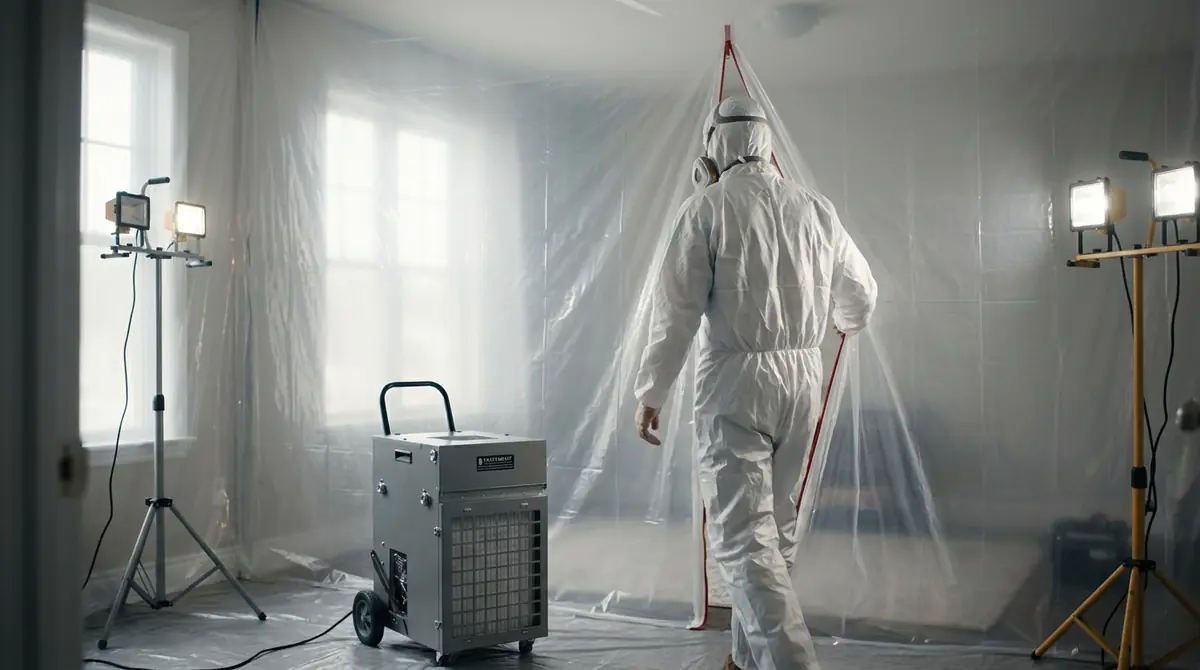
A support manager answers first · you agree a booking time · the specialist prices the job on the call
No name, phone or email needed. We count anonymous answers, never contact details, to improve this page.
Tell the support manager which rooms are affected, roughly how many square feet, and the date of any storm, flood or leak.
Mold Remediation Co. is a referral service. We connect you by phone with independent local mold remediation companies, and their technicians perform the work. We are not a contractor.
Quick recap
- Audience: Homestead property owners dealing with visible mold, damp musty air, or water from a storm, flood or leak.
- Contact: dial (856) 595-8837; the support manager sets the booking time.
- Estimate: provided by the local specialist during the call.
- Work: carried out by independent network technicians who are licensed, insured and certified.
- Coverage: all 6 residential Homestead ZIP codes plus the 6 Miami ZIP codes nearest Homestead.
How does a call about Homestead mold work?
Your call to (856) 595-8837 reaches a support manager, who asks which rooms are affected and whether storm or leak water came in, then books a time. A local mold specialist follows up quickly, sometimes the same day, with the estimate.
- Dial (856) 595-8837 and tell the support manager what you see or smell.
- Agree on a booking time with the support manager.
- Receive the specialist's call and the estimate that comes with it.
Have these details ready
- Measure each patch of growth. EPA places patches under about 10 sq ft, close to 3 ft by 3 ft, within homeowner cleanup.
- Note the date floodwater, storm rain or an air conditioning drain overflow wet the floors or walls, and how long they stayed wet.
- Check the indoor humidity on a thermostat or hygrometer. EPA advises keeping it below 60 percent, ideally between 30 and 50 percent.
- Name anyone at home with asthma, a mold allergy, a weakened immune system or chronic lung disease, the groups CDC lists as higher risk.
- Leave a musty-smelling air conditioning system off. EPA advises against running a system you know or suspect is contaminated with mold.
Why does mold grow so readily in Homestead homes?
Homestead mold feeds on heat, humid air and storm water. The Homestead General Aviation Airport station averages 59.9 inches of precipitation and about 4,108 cooling degree days a year, and the 6 residential ZIP codes hold 3,754 flood insurance claims since 1978.
A cooling season that fills the year
Homestead General Aviation Airport, the NOAA normals station at about 9 ft above sea level, records about 4,108 cooling degree days and only about 182 heating degree days a year (1991-2020 normals). A cooling degree day counts how far a day's mean temperature climbs above 65°F, so air conditioning runs through most of the year. Every cooled duct, register and air handler becomes a surface where moisture collects. EPA calls condensation a sign of high humidity, asks owners to keep air conditioning drip pans clean and drain lines flowing, and sets an indoor target below 60 percent relative humidity.
Precipitation across the 6 ZIP codes
Rainfall differs inside the coverage area. ZIPs 33030, 33031 and 33035 use the Homestead General Aviation Airport station at 59.9 inches a year. ZIPs 33032 and 33033 sit nearest the Perrine 4W station, which averages about 66.5 inches, and ZIP 33034 uses the Royal Palm RS station at about 57.4 inches. Miami-Dade County as a whole averages 57.5 inches (NOAA nClimDiv, 1991-2020).
Hurricane and flood record
Property owners in Homestead's 6 residential ZIP codes have filed 3,754 National Flood Insurance Program (NFIP) claims since 1978, and 345 of those since 2016. ZIP 33033 leads with 1,023 claims, 33032 follows with 901 and 33030 with 869, and every covered ZIP shows claims. Miami-Dade County has been included in 12 federal major disaster declarations for water and storm events since 2000: 9 hurricanes, 2 severe storms and 1 freezing event. EPA's rule once storm water gets inside is to dry water-damaged areas and items within 24 to 48 hours to prevent mold growth.
Where does mold show up in Homestead houses?
Homestead mold shows up in 3 places: the air conditioning system and the ducts it cools, walls and floors soaked by storm or flood water, and bathrooms where shower moisture lingers. Humid outdoor air feeds all 3 through most of the year.
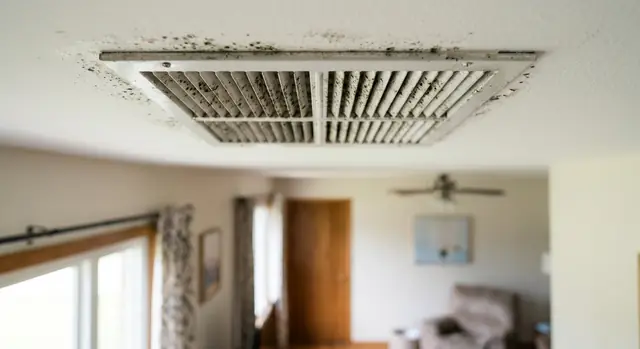
Air conditioning and duct mold
Air conditioning in Homestead runs most of the year, and each cooled surface gathers moisture from indoor air. EPA asks owners to keep drip pans clean and drain lines unobstructed, and it lists the inside of ductwork as a place mold hides. The specialist checks the air handler, drip pan, condensate line, supply registers and reachable duct runs. Our national guide to household moisture sources covers humidity, condensation and venting in more depth.
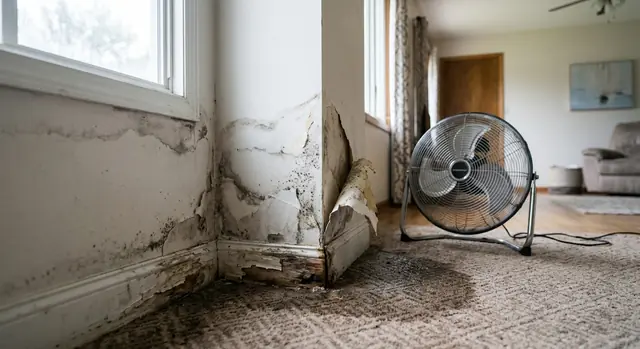
Storm and flood water mold
Water that enters during a hurricane or heavy storm soaks drywall, baseboards, carpet and insulation from the floor up. EPA ties mold prevention to drying water-damaged areas and items within 24 to 48 hours. The specialist measures how high water wicked into each wall, removes porous material that stayed wet, and dries the slab and framing before anything is rebuilt.
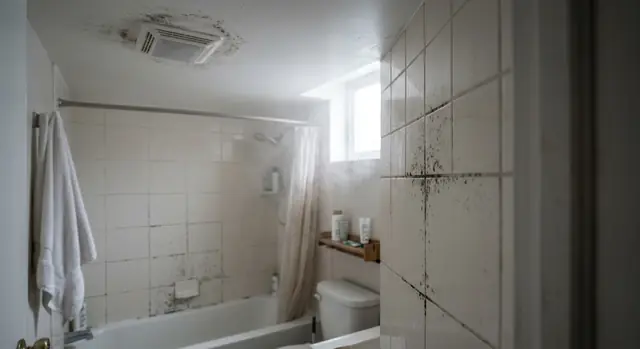
Bathroom mold
A bathroom adds shower steam to indoor air that is already humid. EPA's advice is to run the bathroom fan or open the window when showering. Mold on grout and tile is a surface job. Growth in ceiling drywall or behind the tub surround means moisture reached porous material, and the specialist prices that removal as its own line.
Which materials in Homestead homes do humidity and flood mold damage?
Humidity and flood mold in Homestead damages 5 materials: drywall and baseboards, carpet and pad, insulation in walls and ducts, wood trim and cabinets, and concrete slab surfaces. Porous materials full of growth are removed; hard surfaces are cleaned and dried.
- Drywall and baseboards
Gypsum board wicks floodwater upward from the floor. EPA treats moldy porous material as hard to clean completely, so affected drywall is cut out and replaced.
- Carpet and pad
Carpet and its pad hold water against the slab. EPA groups carpet with other absorbent materials that are often thrown away once moldy, and the quote states whether pad and tack strip go too.
- Insulation
Wall-cavity batts and duct wrap stay damp in humid air. EPA's water-damage table lists wet fiberglass and cellulose insulation for discard and replacement.
- Wood trim and cabinets
Door casings, cabinet bases and vanity panels sit at floor level, where storm water arrives first. Solid wood with surface growth is cleaned and dried, and the quote names any piece that is replaced.
- Concrete slab
Concrete is a hard surface that cleans. EPA's method for hard surfaces is to scrub off the mold with detergent and water and dry them completely.
What are Florida's rules for mold assessment and remediation?
Florida licenses mold assessors and mold remediators separately through the Department of Business and Professional Regulation (Chapter 468, Part XVI), and a company generally cannot both assess and remediate the same structure within 12 months, with limited exceptions. Ask for each license.
On a Homestead job the rule points to 2 separate businesses: one assesses the mold, and another removes it. Ask the assessor and the remediator for their Department of Business and Professional Regulation (DBPR) license details, and ask the remediator to confirm it did not assess the same structure in the past 12 months.
Florida coverage beyond Homestead is listed on our page about mold removal in Florida.
What steps does mold remediation follow in a Homestead home?
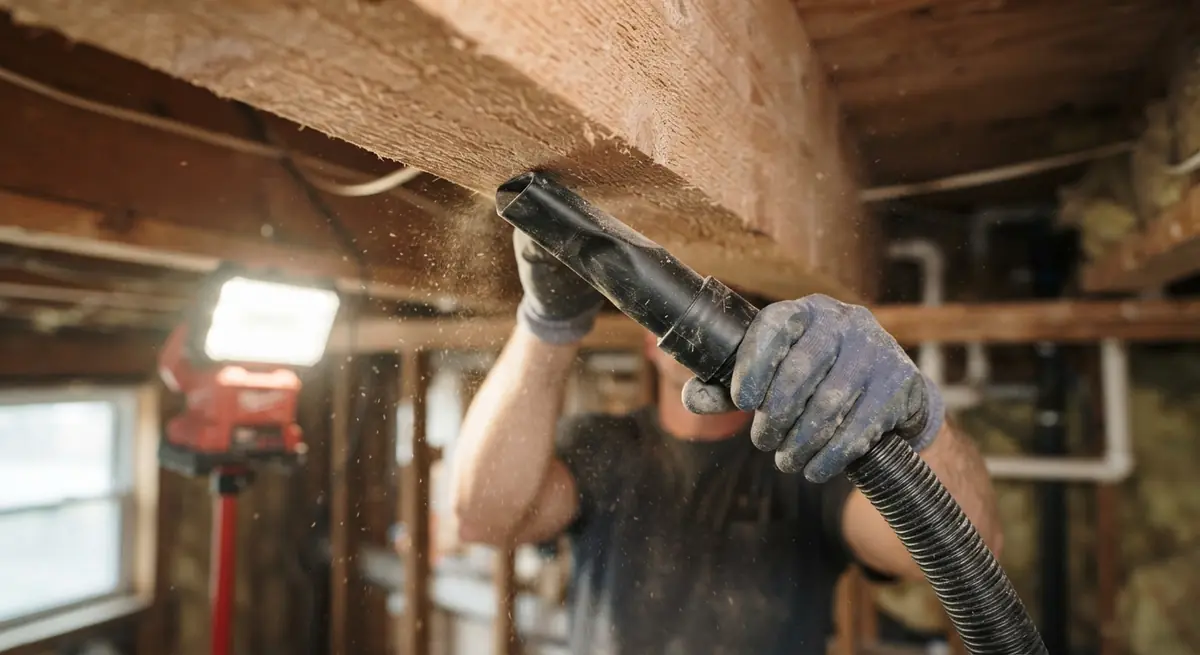
Mold remediation in a Homestead home follows 6 steps: moisture and growth assessment, containment with plastic sheeting, HEPA air filtration, removal of soaked porous materials and cleaning of hard surfaces, drying of the slab and framing, and a final clearance check.
- Assessment: moisture readings across walls, floors and the air conditioning system show how far water and growth reach.
- Containment: EPA sets limited containment for 10 to 100 sq ft of growth and full containment for more than 100 sq ft.
- Filtration: high-efficiency particulate air (HEPA) units clean the air inside the work area while materials come out.
- Removal: wet drywall, carpet and insulation leave in sealed bags; concrete, tile and metal are scrubbed with detergent and water.
- Drying: dehumidifiers and air movers bring the slab, framing and cabinets back to dry readings before rebuild.
- Clearance: an independent check confirms no visible growth, no moldy odor and dry materials before the walls close.
Is a mold test needed before remediation in Homestead?
No. Visible mold in a Homestead home goes straight to removal without a lab test. CDC does not recommend mold testing, because no accepted standard defines an acceptable indoor level. An inspection with moisture readings sets the scope instead.
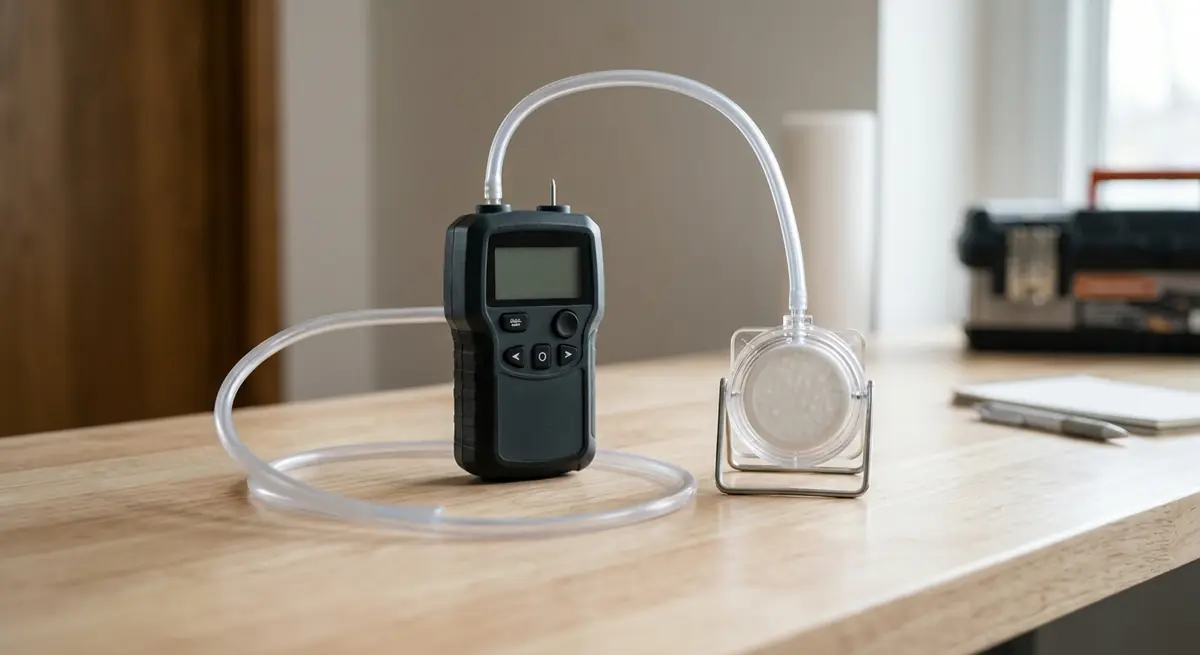
Lab sampling earns its fee in 2 cases: a musty odor with no visible growth, where air or surface samples help find hidden mold, and the clearance check after removal. Florida licenses mold assessors through DBPR, so ask the inspector for that license. Assessor options, sampling and clearance are covered on our page about mold inspection in Homestead.
What sets the price of mold remediation in Homestead?
Square footage sets the base price of mold remediation in Homestead. Containment level, flood-soaked materials to remove, air conditioning and duct work, drying time and clearance testing push it up or down. The local specialist states the estimate on the call.
A flood job costs more through volume: water that spreads across a slab floor wets drywall, baseboards and carpet in several rooms, not one wall. A cooling-system job adds the air handler and duct runs as their own line. National HomeAdvisor figures (no verified Homestead range was found) and a full checklist are on our page about mold removal cost in Homestead.
Lines a fair quote includes
- Square feet of growth per room
- Containment level and HEPA equipment
- Each material removed and each surface cleaned
- Air handler, drip pan and duct work, priced separately
- Drying equipment and the target moisture readings
- Clearance check and the company that runs it
Warning signs in a quote
- An assessor offering to do the removal as well; ask how that fits Florida's 12-month rule.
- A surcharge because the growth looks black; CDC states the type does not need to be identified.
- Cash-only terms with no written scope.
- Removal with no plan for the drain line, roof or flood entry point that wet the area.
How do you know a Homestead mold job is finished?
A Homestead mold job is finished when the water source is fixed, indoor humidity is under control, affected materials read dry, and an independent clearance check finds no visible growth or moldy odor. Skipping the moisture fix lets the mold return.
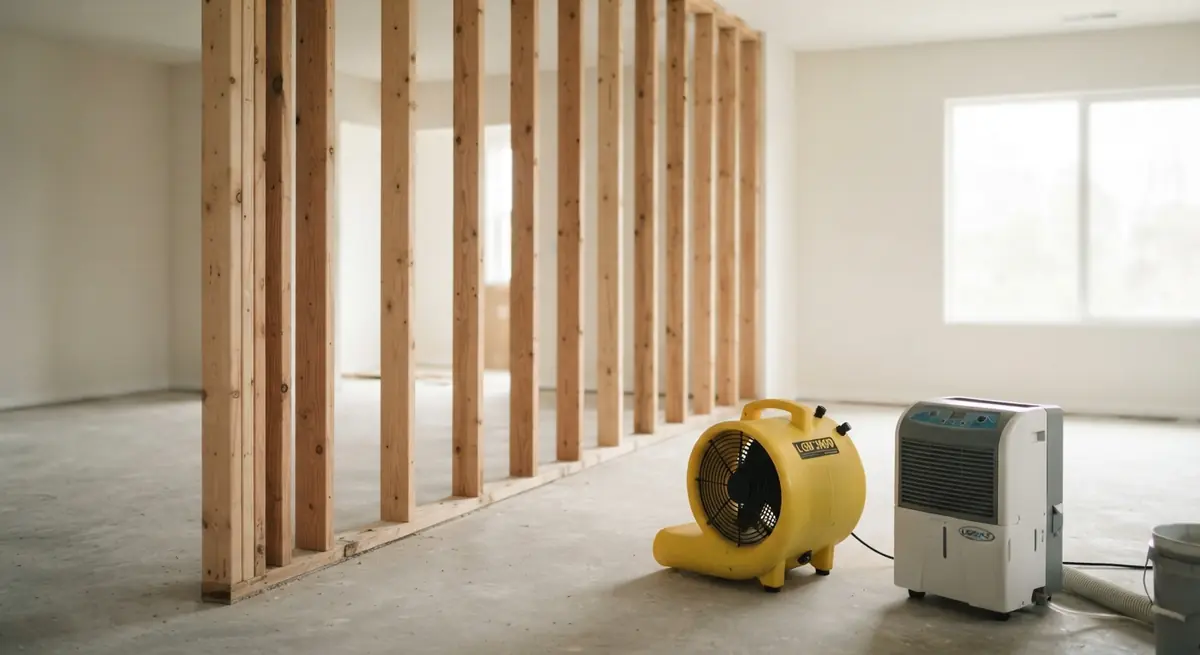
EPA's position is plain: cleaning mold without fixing the water problem brings the mold back. In Homestead the fix ranges from a cleared air conditioning drain line to a repaired storm-damaged roof or window. Indoor humidity belongs on the checklist too, measured against EPA's target of under 60 percent. Keep the clearance result in writing before new drywall, baseboard or flooring goes in.
Which Homestead ZIP codes does the network cover?
The network covers all 6 residential Homestead ZIP codes: 33030, 33031, 33032, 33033, 33034 and 33035. Calls from the 6 Miami ZIP codes closest to Homestead reach the same specialist network: 33170, 33177, 33187, 33189, 33190 and 33194.
| Town | Covered ZIP codes |
|---|---|
| Miami | 33170, 33177, 33187, 33189, 33190, 33194 |
Calling from a ZIP code missing here? The support manager confirms on the call whether a specialist covers it.
Homestead mold remediation FAQ
Does flood insurance pay for mold after a Homestead storm?
Mostly no. FEMA states that National Flood Insurance Program policies do not cover mold damage, with 2 exceptions: an official barred entry to the property, or floodwater kept the owner from reaching it. Start cleanup and documentation right away.
Can a dehumidifier stop mold in a Homestead home?
A dehumidifier controls the humidity that feeds mold, but it does not remove growth that already exists. EPA advises air conditioners or dehumidifiers to hold indoor humidity below 60 percent; existing growth still needs removal and a moisture fix.
How soon after a storm does mold start?
EPA's guidance is to dry water-damaged areas and items within 24 to 48 hours to prevent mold growth. Drywall, carpet or insulation still damp after that window is treated as a mold risk and checked before any rebuild.
Is a musty smell from the AC a mold problem?
A musty odor with no visible source points to hidden mold, and EPA lists the inside of ductwork as a hidden-mold location. Switch the system off and have the air handler, drip pan, drain line and ducts checked.
Who is most at risk from mold in a Homestead home?
CDC names people with asthma, a mold allergy, a weakened immune system or chronic lung disease as more likely to react to mold. Mention them to the support manager on the call, and talk to a health professional about symptoms.
Humid-air, flood or AC mold in Homestead? Call (856) 595-8837. The support manager sets your booking time, and a network specialist prices the job on the call.
Call (856) 595-8837