Mold Remediation in Atlanta, GA
Mold remediation in Atlanta, GA is one phone call away at (856) 595-8837. A support manager logs the problem and confirms a booking time, then a local specialist from our network calls you quickly, sometimes the same day, with the estimate. The work covers crawl spaces, bathrooms and rooms where humid summer air condenses: inspection, containment, removal of moldy material and the moisture fix.
- One call, no forms to fill out
- Support manager available 24/7 to confirm your booking time
- A specialist contacts you quickly, sometimes the same day
- Free estimate and inspection, given on the call
- Insured and certified network technicians
- Help with insurance claims
- Written warranty on the work
- Independent clearance testing available
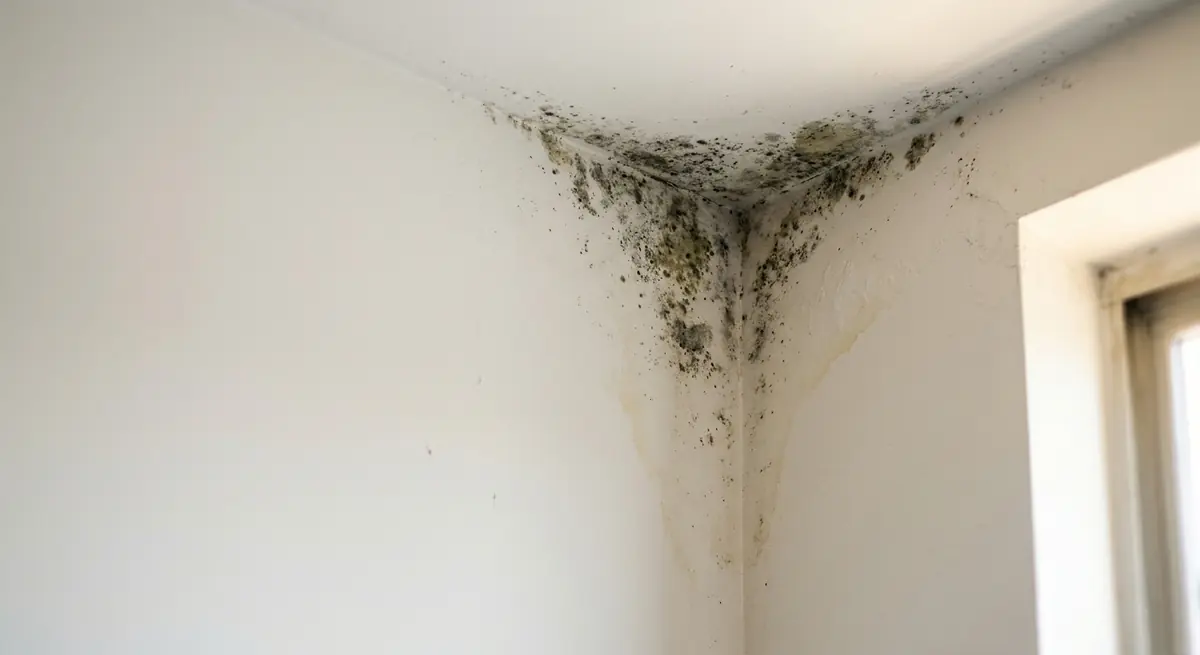
A support manager answers · you choose a booking time · the specialist gives the estimate on the call
No name, phone or email needed. We count anonymous answers, never contact details, to improve this page.
Tell the support manager where the mold is, about how many square feet it covers, and when any leak or flooding happened.
Mold Remediation Co. is a referral service. We connect you by phone with independent local mold remediation companies, and their technicians perform the work. We are not a contractor.
Quick recap
- Audience: Atlanta owners with visible growth, a musty crawl space, a damp bathroom, or water from a leak or storm.
- Contact: a single call to (856) 595-8837; the support manager confirms your booking time.
- Estimate: given on the call by the local specialist.
- Work: performed by independent network technicians who are insured and certified.
- Coverage: 39 Atlanta ZIP codes plus Decatur, Marietta, Smyrna, Roswell, Alpharetta and 35 more nearby towns.
What happens on a call about Atlanta mold?
A support manager picks up, records where the mold is and about how much there is, and agrees a booking time with you. A local mold specialist follows quickly, sometimes the same day, and quotes the job during that call.
- Ring (856) 595-8837 and explain the problem to the support manager.
- Settle on a booking time that fits your day.
- Answer the specialist's call and hear the estimate.
What to gather first
- Check the crawl space entry and each bathroom for growth, wet insulation or a musty smell.
- Measure the affected area. EPA treats patches under about 10 sq ft, near 3 ft by 3 ft, as homeowner cleanup.
- Record the date of any leak, storm or overflow, and whether the water source is still active.
- Read indoor humidity on a thermostat or hygrometer. EPA's target is below 60 percent.
- Mention household members with asthma, a mold allergy, weak immunity or chronic lung disease, the higher-risk groups CDC lists.
What makes Atlanta homes prone to mold?
Atlanta homes take on moisture in both seasons. Atlanta Peachtree Airport averages 51.4 inches of precipitation, about 1,728 cooling degree days and 2,980 heating degree days a year, so condensation forms on cooled surfaces in summer and cold ones in winter.
Rain across 39 ZIP codes
Precipitation varies inside the coverage area. Atlanta Peachtree Airport, the main NOAA normals station for the city at about 1,000 ft, averages 51.4 inches a year (1991-2020 normals). The Atlanta Fulton County Airport station, used for ZIPs 30303, 30310, 30311, 30312 and 30314, averages 48.1 inches. Atlanta Hartsfield International Airport averages 50.4 inches, and the Norcross station, used for 30338, 30350 and 30360, averages 56.3 inches. Fulton County as a whole averages 52.6 inches (NOAA nClimDiv, 1991-2020).
Cooling in summer, heating in winter
A cooling degree day measures how far a day's mean temperature rises above 65°F, and a heating degree day how far it drops below. The Peachtree station logs about 1,728 of the first and about 2,980 of the second each year; Hartsfield logs about 2,051 and 2,531. Air conditioning chills coils, drip pans and ducts through the summer, and pipes and outer walls run cold in winter. EPA names condensation as a sign of high humidity, lists the inside of ductwork as a hidden-mold location, and advises keeping indoor relative humidity below 60 percent, ideally 30 to 50 percent.
Flood claims by ZIP code
Property owners in Atlanta's 39 residential covered ZIP codes have filed 4,205 National Flood Insurance Program (NFIP) claims since 1978, 777 of them since 2016. ZIP 30327 accounts for 764, 30342 for 488 and 30339 for 337. ZIPs 30313, 30326, 30332, 30346 and 30363 show none; a blank record reflects insured claims only, not an absence of flood risk. Fulton County has been included in 7 federal major disaster declarations for storms since 2000: 3 hurricanes, 3 severe storms and 1 severe ice storm. EPA's guidance once water gets in is to dry wet areas and items within 24 to 48 hours.
Where does mold grow in Atlanta homes?
Atlanta mold grows in 3 main places: crawl spaces, where moist air and plumbing leaks meet cool framing; rooms and ducts cooled by air conditioning; and bathrooms, where shower moisture adds to indoor humidity. Each hides growth until an odor appears.
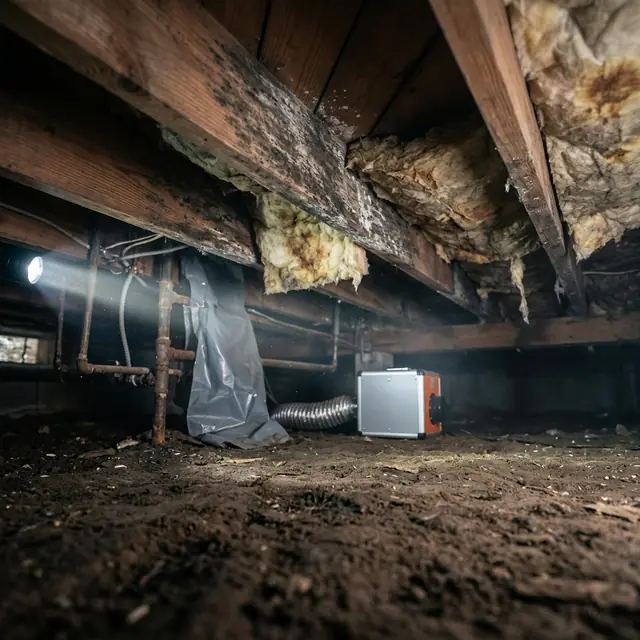
Crawl space mold
A crawl space holds supply lines, drain lines and duct runs under the floor, out of sight. Warm, moist air that reaches cool pipes and ducts there leaves water behind, and EPA names condensation on cold surfaces as a moisture source and advises insulating cold water pipes. The specialist checks joists, subfloor, insulation, pipes and ducts, finds the water source, and prices removal and drying as one scope. Our guide on what causes mold in a house explains condensation, leaks and humidity in more detail.
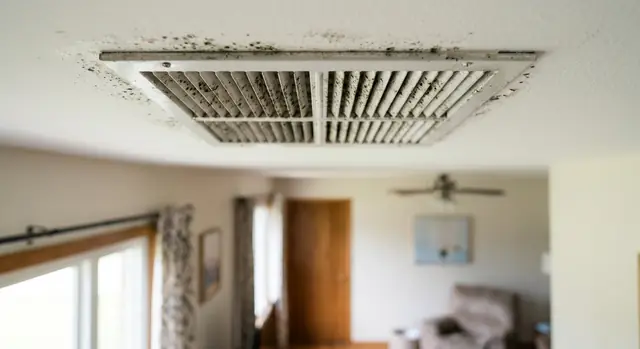
Air conditioning and duct mold
Air conditioning runs through Atlanta's cooling season and leaves its coil, drip pan and supply ducts cool and damp. EPA asks owners to keep drip pans clean and drain lines flowing, lists ductwork as a hidden-mold location, and advises against running a system suspected of contamination. The specialist includes the air handler and reachable ducts in the inspection.
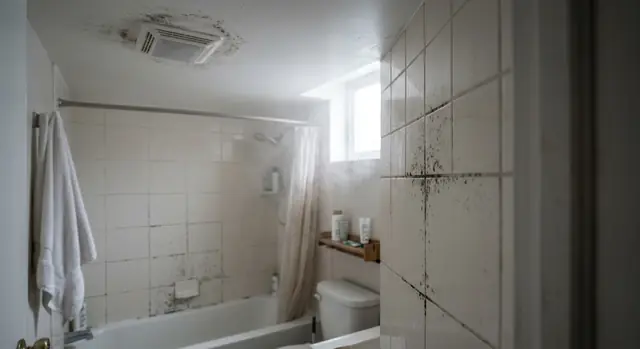
Bathroom mold
A bathroom without steady ventilation adds shower moisture to indoor air every day. EPA's advice is to run the bathroom fan or open the window when showering. Growth limited to grout and tile is a cleaning job; growth in ceiling drywall or behind the tub wall is a removal job with its own price.
Which materials does Atlanta crawl space and humidity mold damage?
Crawl space and humidity mold in Atlanta damages 5 materials: floor joists and subfloor, fiberglass insulation around joists and ducts, bathroom and exterior-wall drywall, ductwork, and carpet. Porous materials full of growth come out; solid wood and hard surfaces are cleaned.
- Joists and subfloor
Framing over a damp crawl space absorbs moisture from leaks and condensation. EPA notes that molds gradually destroy the things they grow on, so the quote separates members cleaned from members replaced.
- Insulation
Batts between crawl space joists and wraps on ducts hold moisture against wood and metal. EPA's water-damage table lists wet fiberglass insulation for discard and replacement.
- Drywall
Bathroom ceilings and the inside face of exterior walls collect condensation. EPA treats moldy porous material such as drywall as a removal item, because growth is hard to clean out of it.
- Ductwork
Supply ducts in a crawl space or attic carry chilled air through warm, damp space. EPA lists the inside of ductwork as a hidden-mold location.
- Carpet
Carpet over a damp subfloor traps moisture underneath. EPA groups carpet with ceiling tiles as absorbent materials that are often thrown away once moldy.
What does Georgia require for mold remediation?
We have not found a Georgia state mold-specific license; confirm general contractor licensing with the Georgia Secretary of State. That leaves the written quote and contract to set the scope, containment and clearance terms for an Atlanta mold job.
Our review of Georgia rules relied on secondary sources, so this page records what we did not find rather than stating that no rule exists. Before signing, ask the specialist which Georgia contractor license applies to the rebuild part of the job, and check it with the Georgia Secretary of State.
Statewide coverage and other Georgia cities in the network are on our page about mold remediation across Georgia.
What does professional mold remediation involve in Atlanta?
Mold remediation in Atlanta runs in 6 stages: assessment, containment of the work zone, HEPA air filtration, removal or cleaning of moldy materials, repair of the moisture source, and verification that the area is clean and dry before rebuilding starts.
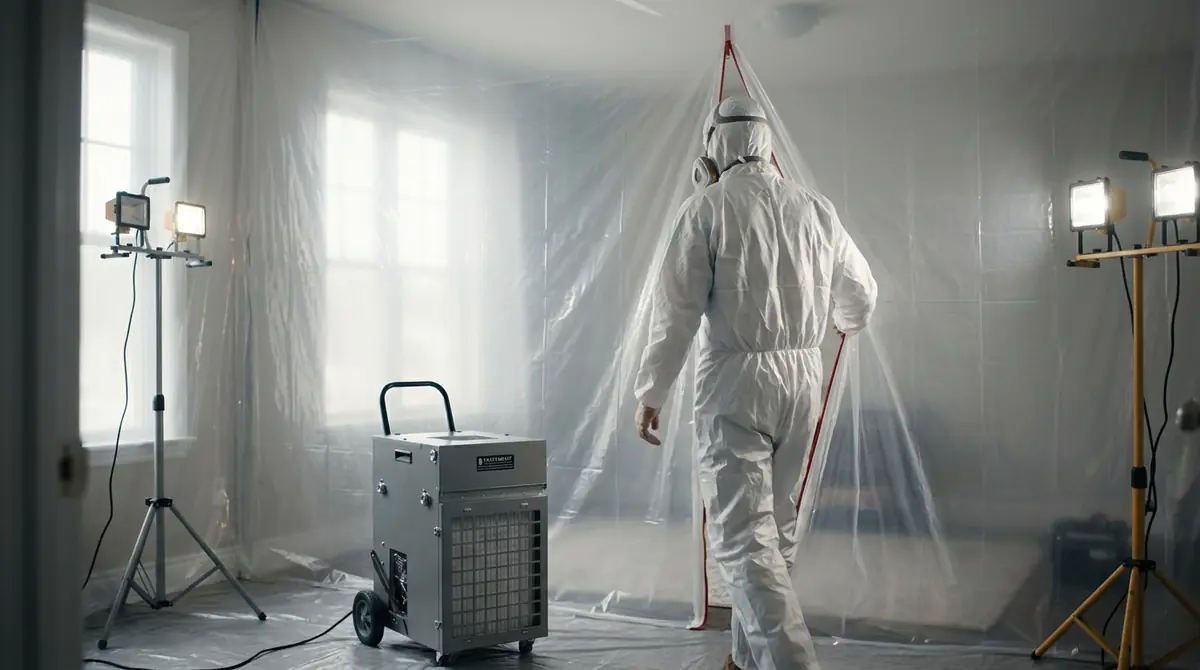
- Assessment: the specialist traces growth through the crawl space, bathrooms and ducts and measures moisture in each material.
- Containment: sheeting seals the work zone; EPA calls for limited containment from 10 to 100 sq ft and full containment above 100 sq ft.
- Filtration: high-efficiency particulate air (HEPA) units run throughout, and HEPA vacuums finish dried surfaces.
- Removal: insulation, drywall and carpet filled with growth leave in sealed bags; joists and other solid surfaces are scrubbed and dried.
- Repair: the leaking line, condensing pipe or duct, or weak ventilation that fed the mold is fixed.
- Verification: the zone is checked for growth, odor and moisture before anything is rebuilt.
Do Atlanta homes need mold testing before removal?
No. Visible mold in an Atlanta home calls for removal, not lab testing. CDC does not recommend mold testing, and EPA sets no federal limit for airborne mold. Inspection with a moisture meter, not a spore count, sets the scope of work.
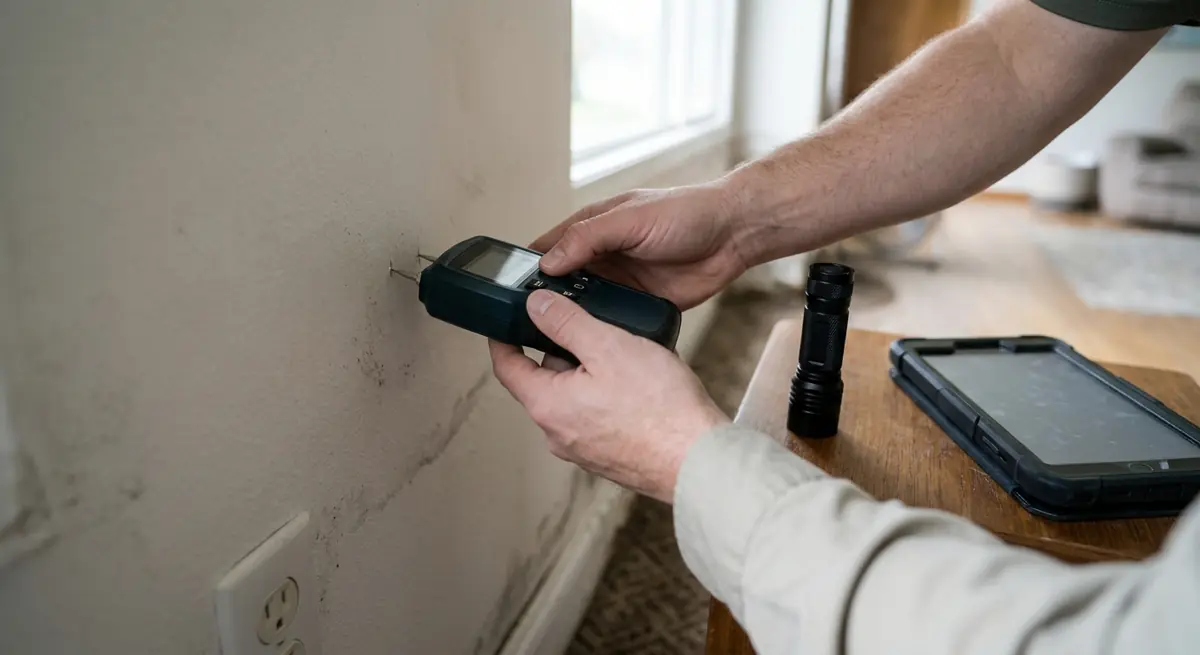
Samples help in 2 places: tracing a musty crawl space or closet odor with no visible growth, and confirming a finished job at clearance. Inspection scope, sampling choices and questions for the inspector are on our page about mold inspection in Atlanta.
What drives the cost of mold remediation in Atlanta?
Square footage is the starting point of an Atlanta mold remediation price. Crawl space access, containment level, materials removed, duct work, the moisture repair and clearance testing raise or lower it. The specialist gives the estimate on the call.
Work under the floor takes longer than work in an open room: technicians lie or crouch beneath the joists, and every bag of debris leaves through one access opening. HomeAdvisor's Atlanta figures and a full line-item checklist are on our page about mold removal cost in Atlanta.
Items a complete quote shows
- Square feet by area, with the crawl space measured on its own
- Containment level and the number of HEPA units
- Each material removed and each surface cleaned
- Duct or air handler work, or a note that it is excluded
- Moisture repair, or the trade that handles it
- Clearance check and who performs it
Quote warning signs
- A higher price because the mold is called black or toxic; CDC sees no need to identify the type
- A single total with no square footage
- Clearance run by the same company that did the removal
- Payment in cash only
- A removal price with no plan for the moisture source
When is mold remediation in an Atlanta home complete?
An Atlanta mold job is complete when the moisture source is repaired, crawl space framing and other materials read dry, indoor humidity sits under EPA's 60 percent target, and an independent clearance check confirms the work area is clean.
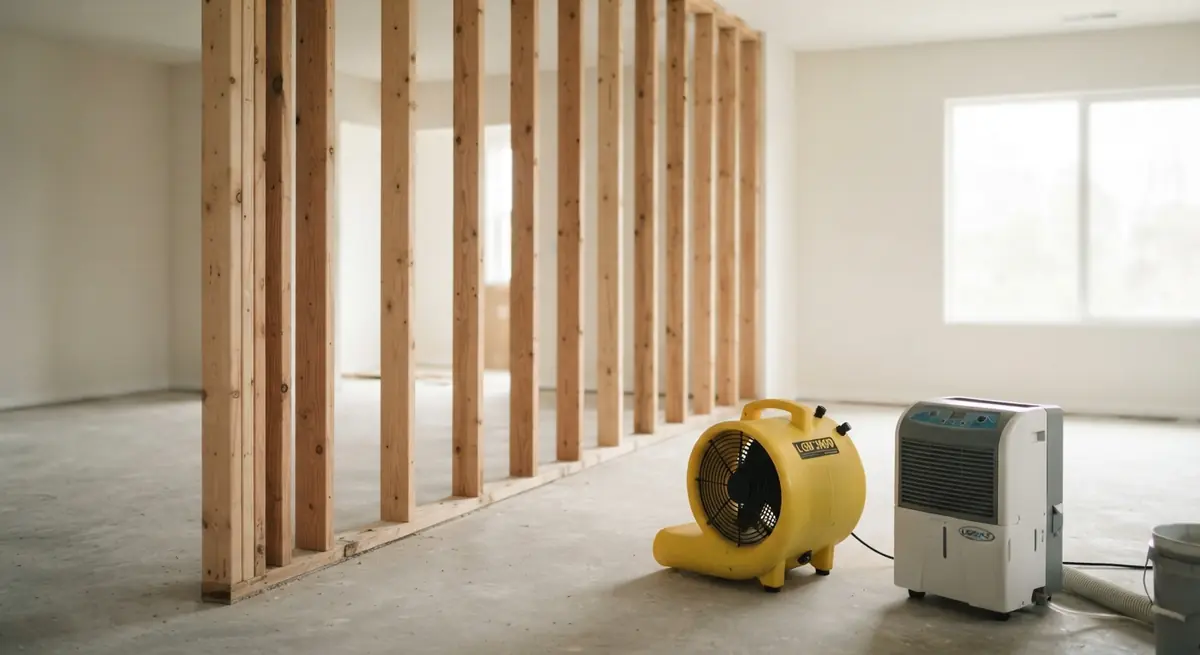
EPA is direct about the order: clean up mold without fixing the water problem, and the mold returns. Under an Atlanta house that means the leak is repaired or the condensing pipe insulated before new insulation goes in. In a bathroom it means steady ventilation, which EPA describes as running the fan or opening the window when showering. Get the clearance result in writing before any rebuild.
Which Atlanta ZIP codes and nearby towns are covered?
The network covers 39 Atlanta ZIP codes and calls from 40 nearby towns, among them Decatur, Marietta, Smyrna, Tucker, Roswell, Alpharetta, Stone Mountain and Lawrenceville. Use the ZIP check below or the town table to find your own code.
Atlanta ZIP codes covered: 30303, 30305, 30306, 30307, 30308, 30309, 30310, 30311, 30312, 30313, 30314, 30315, 30316, 30317, 30318, 30319, 30322, 30324, 30326, 30327, 30328, 30329, 30331, 30332, 30336, 30337, 30338, 30339, 30340, 30341, 30342, 30344, 30345, 30346, 30349, 30350, 30354, 30360 and 30363.
| Town | Covered ZIP codes |
|---|---|
| Acworth | 30101, 30102 |
| Alpharetta | 30004, 30005, 30009, 30022 |
| Austell | 30106, 30168 |
| Avondale Estates | 30002 |
| Clarkston | 30021 |
| Conley | 30288 |
| Conyers | 30012, 30013, 30094 |
| Decatur | 30030, 30032, 30033, 30034, 30035 |
| Douglasville | 30134, 30135 |
| Duluth | 30096, 30097 |
| Ellenwood | 30294 |
| Fairburn | 30213 |
| Forest Park | 30297 |
| Grayson | 30017 |
| Hiram | 30141 |
| Jonesboro | 30236, 30238 |
| Kennesaw | 30144, 30152 |
| Lawrenceville | 30043, 30044, 30045, 30046 |
| Lilburn | 30047 |
| Lithia Springs | 30122 |
| Lithonia | 30038, 30058 |
| Lovejoy | 30250 |
| Mableton | 30126 |
| Marietta | 30008, 30060, 30062, 30064, 30066, 30067, 30068 |
| Morrow | 30260 |
| Norcross | 30071, 30093 |
| Peachtree Corners | 30092 |
| Pine Lake | 30072 |
| Powder Springs | 30127 |
| Rex | 30273 |
| Riverdale | 30274, 30296 |
| Roswell | 30075, 30076 |
| Scottdale | 30079 |
| Smyrna | 30080, 30082 |
| Snellville | 30039, 30078 |
| Stockbridge | 30281 |
| Stone Mountain | 30083, 30087, 30088 |
| Tucker | 30084 |
| Union City | 30291 |
| Woodstock | 30188, 30189 |
Not listed? The support manager checks any ZIP code during the call.
Atlanta mold remediation FAQ
Does homeowners insurance cover crawl space mold in Atlanta?
Rarely, when the mold built up over time. Homeowners policies pay for mold mainly when a sudden covered event, such as a burst pipe, caused it. Long-term leaks and humidity fall outside most policies, and some policies cap mold payouts.
How is surface mold in an Atlanta bathroom cleaned?
EPA's method for hard surfaces is to scrub the mold off with detergent and water and dry the surface completely. Grout and tile clean that way; growth inside ceiling drywall or behind a tub wall needs removal and better ventilation.
Why does mold come back in Atlanta crawl spaces?
Mold returns when the moisture source stays. EPA states that cleaning mold without fixing the water problem brings it back, so a leaking line, an uninsulated cold pipe or wet insulation left under the floor restarts growth after removal.
What indoor humidity level helps prevent mold in Atlanta?
EPA advises keeping indoor relative humidity below 60 percent, ideally between 30 and 50 percent. Air conditioning or a dehumidifier holds that range in an Atlanta summer, and condensation on windows or pipes signals the humidity is too high.
How much mold can an Atlanta homeowner clean alone?
About 10 square feet, a patch near 3 feet by 3 feet, is the size EPA places within homeowner cleanup. Larger growth, sewage water, a contaminated air conditioning system or health concerns point to a professional mold specialist instead.
Crawl space, bathroom or duct mold in Atlanta? Call (856) 595-8837. A support manager confirms your time, and the local specialist prices the job on the call.
Call (856) 595-8837