Mold Remediation in Seattle, WA
Seattle mold remediation is booked through one call to (856) 595-8837: a support manager confirms a time, and a local specialist from our network contacts you quickly, sometimes the same day, with the estimate on that call. Long wet seasons put the work under the house first, so crawl spaces lead, then attics and bathrooms, with the moisture source fixed before anything is closed up.
- One call, no forms to fill out
- Support manager available 24/7 to confirm your booking time
- A specialist contacts you quickly, sometimes the same day
- Free estimate and inspection, given on the call
- Licensed, insured and certified network technicians
- Help with insurance claims
- Written warranty on the work
- Independent clearance testing available
One call · a support manager books the time · the specialist's estimate comes on the call
No name, phone or email needed. We count anonymous answers, never contact details, to improve this page.
Say on the call whether the mold is under the floor, in the attic or in a bathroom, its rough size, and whether water is standing anywhere.
Mold Remediation Co. is a referral service. We connect you by phone with independent local mold remediation companies, and their technicians perform the work. We are not a contractor.
Quick recap
- Audience: Seattle property owners with crawl space dampness, attic staining, a musty bathroom or a recent leak.
- Contact: one call to (856) 595-8837; a support manager sets the booking time.
- Estimate: free, and given on the call by the local specialist.
- Work: done by independent network technicians who are licensed, insured and certified.
- Coverage: 35 Seattle ZIP codes plus Bellevue, Kirkland, Redmond, Edmonds, Lynnwood and 8 more nearby towns.
What happens on a call about Seattle mold?
A support manager takes the call, asks where the mold sits, how much area it covers and whether water is present, and books a time. A local specialist from our network then contacts you quickly, sometimes the same day, with the estimate.
- Phone (856) 595-8837 and describe where the mold is.
- Settle on a booking time with the support manager.
- Receive the specialist's call and the estimate that comes with it.
Have these answers ready
- Whether the crawl space has standing water, wet soil or damp insulation between the joists.
- Which ceilings or attic areas show staining, and when it first appeared.
- The approximate area of each patch; EPA's line for homeowner cleanup is about 10 sq ft, close to 3 ft by 3 ft.
- Anyone at home with asthma, a mold allergy, chronic lung disease or a weakened immune system; CDC lists these groups at higher risk.
- Whether the furnace or ducts smell musty. EPA advises against running a heating or cooling system you suspect is contaminated.
Why does Seattle's climate keep homes damp enough for mold?
Seattle's climate supplies steady moisture and long cold stretches. Seattle Boeing Field averages 36.5 inches of precipitation a year and about 4,340 heating degree days, so wet ground, cold framing and condensation last for months at a time.
Rain gauges across the city
NOAA's 1991-2020 normals list 36.5 inches of yearly precipitation at Seattle Boeing Field, the station assigned to 15 of the 35 covered ZIP codes, including 98101, 98108 and 98118. Seattle Sand Point, assigned to another 15 including 98103, 98115 and 98117, records 37.8 inches. Seattle-Tacoma International Airport, the station for 98148, 98166, 98188 and 98198, records 39.3 inches, and Renton Municipal Airport, the station for 98178, records 34.7 inches. King County as a whole averages 75.4 inches (NOAA nClimDiv, 1991-2020).
Heating demand far outweighs cooling
Boeing Field logs about 4,340 heating degree days a year against about 282 cooling degree days, so heating demand runs roughly 15 times cooling demand; Sand Point logs about 4,480. Each heating degree day is one degree of a day's mean temperature below 65°F. Through those months, floor framing over a crawl space, roof sheathing and window glass stay cold, and EPA names condensation on cold surfaces as a moisture source behind indoor mold.
Flood claims by ZIP code
Seattle's 35 residential covered ZIP codes account for 486 National Flood Insurance Program (NFIP) claims since 1978, 83 of them since 2016. ZIP 98166 has the most with 60, followed by 98155 with 41, 98125 with 35 and 98116 with 34. King County has been part of 12 federal major disaster declarations for water or storm events since 2000: 8 for severe storms and 4 for floods. ZIPs 98134, 98164 and 98195 show no NFIP claims, which reflects insured losses only, not an absence of flood risk.
Where does mold grow in Seattle houses?
Seattle mold grows first under the house, in crawl space framing and subfloor; next in the attic, on roof sheathing; and third in bathrooms. All 3 stay out of sight until a musty odor, staining or a soft floor gives them away.
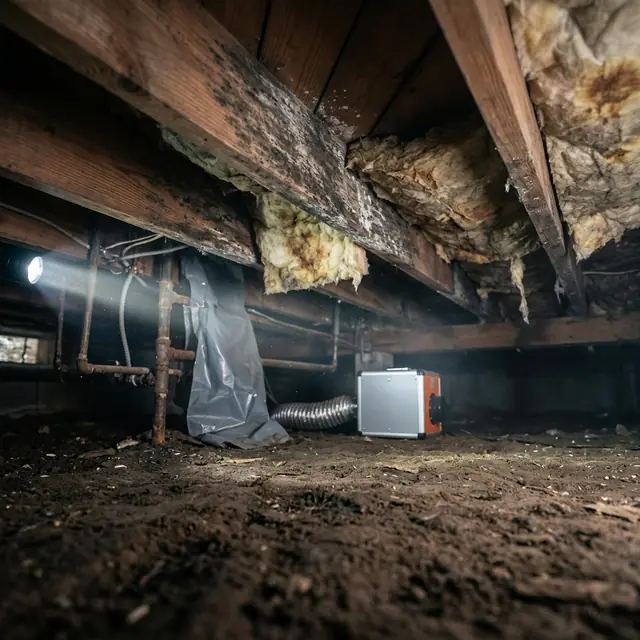
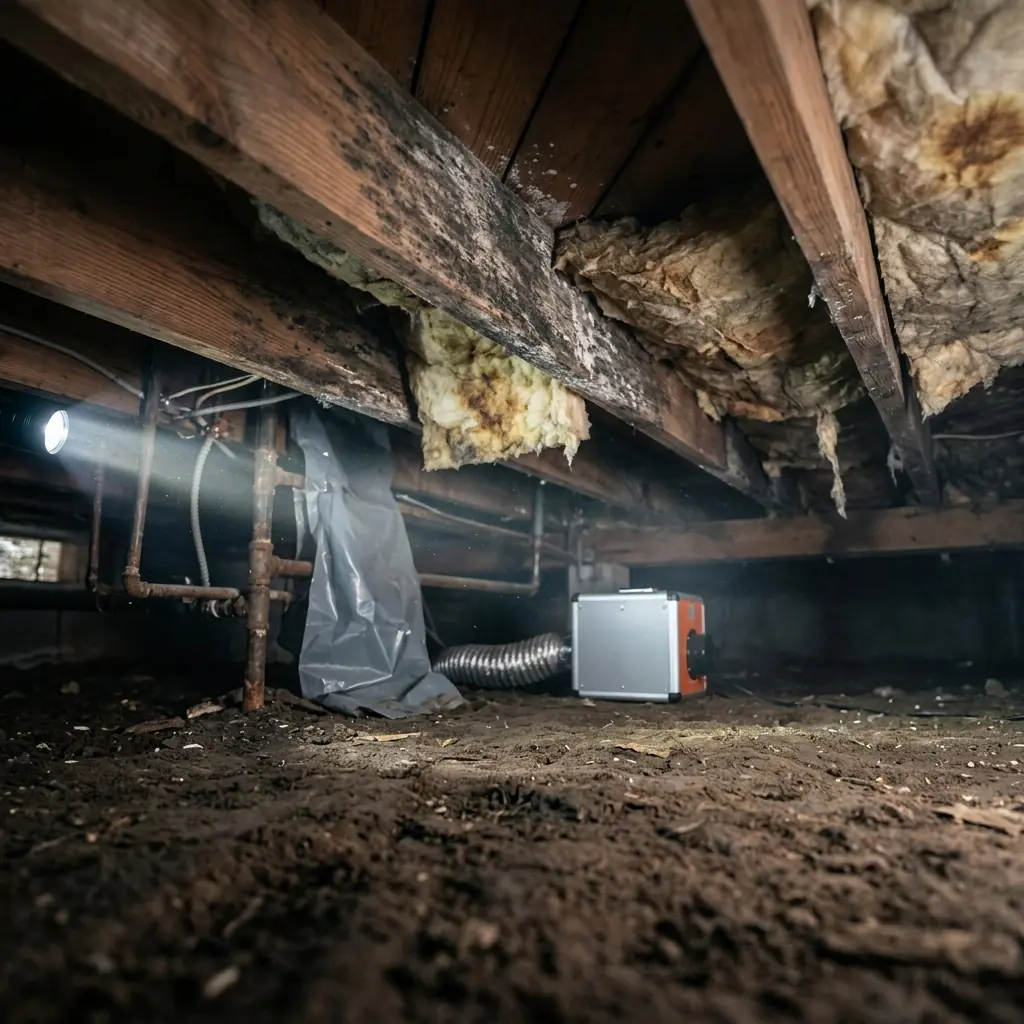
Under-floor mold
Beneath a raised floor, damp soil, rain that seeps past the foundation and any dripping pipe feed a closed space that dries slowly in Seattle's wet months. Floor joists, the subfloor and the insulation between them absorb that moisture, and a musty smell in the rooms above is the usual first sign. The specialist checks the framing, the ground cover and the venting, and prices removal together with the moisture fix. Our guide to mold in a crawl space covers vapor barriers and encapsulation.
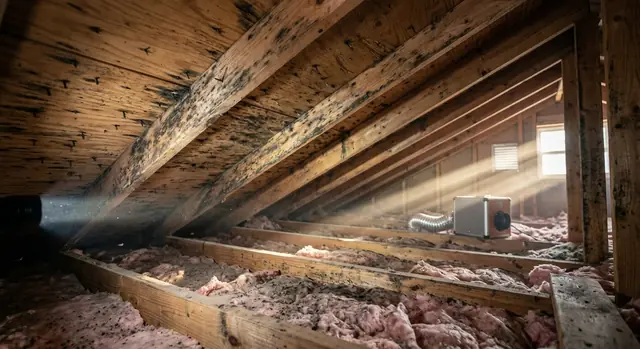
Roof sheathing mold
EPA lists roof materials as a place hidden mold grows, linked to roof leaks and insufficient insulation. With heating demand about 15 times cooling demand at Boeing Field, warm, moist household air that slips into the attic meets cold sheathing for much of the year. The specialist inspects sheathing, rafters and insulation, looks for roof leaks, and confirms the dryer vents outdoors, as EPA advises for moisture-producing appliances.
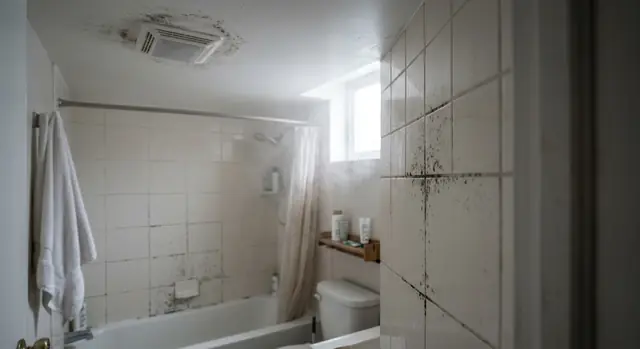
Bathroom mold
Shower steam settles on cold ceilings and outside walls in a Seattle bathroom through the heating season. EPA's guidance is to run the bathroom fan or open the window when showering. Growth that spreads across the ceiling paint, or returns to the same corner after cleaning, points to an exhaust or insulation problem the specialist traces before quoting.
Which materials does Seattle crawl space and attic mold reach?
Seattle crawl space and attic mold reaches 5 materials: floor joists and subfloor, batt insulation, roof sheathing, ductwork, and bathroom ceiling drywall. Wet insulation and moldy drywall are removed and replaced; sound wood and metal are cleaned and dried.
- Joists and subfloor
Framing over a damp crawl space takes on moisture from below for months. EPA notes that molds gradually destroy the things they grow on, so soundness is checked before wood is cleaned or replaced.
- Batt insulation
Fiberglass batts between crawl space joists and across the attic floor hold water against the wood. EPA's water-damage table calls for wet insulation to be discarded and replaced.
- Roof sheathing
Sheathing is the coldest surface that warm attic air reaches. Staining spreads where roof leaks or thin insulation let moisture settle on it.
- Ductwork
Supply and return ducts that pass through a crawl space or attic sit in the same damp air. EPA counts the inside of ductwork as a hidden-mold location.
- Bathroom drywall
Ceiling and wall board above a shower absorbs condensation. EPA notes that mold fills the crevices of porous materials and can be impossible to remove completely, so moldy board is replaced.
What are Washington's rules for mold remediation?
Washington's Department of Health states there are no specific certification requirements for mold or water damage restoration in the state, so homeowners should verify a contractor's L&I registration, insurance and references. L&I is the state Department of Labor & Industries.
With no state mold certification to check, your own questions carry the weight. Before signing with a Seattle company, look up its registration with the Washington State Department of Labor & Industries, ask for proof of insurance, and call 2 or 3 references from jobs similar in size to yours.
Statewide rules and the other Washington city pages are on our page about mold remediation across Washington.
What does mold remediation cover in a Seattle home?
Mold remediation in a Seattle home covers 6 stages: locate growth and moisture, contain the work zone, run HEPA filtration, remove or clean affected materials, correct the moisture source, and confirm the area is clean and dry before rebuilding.
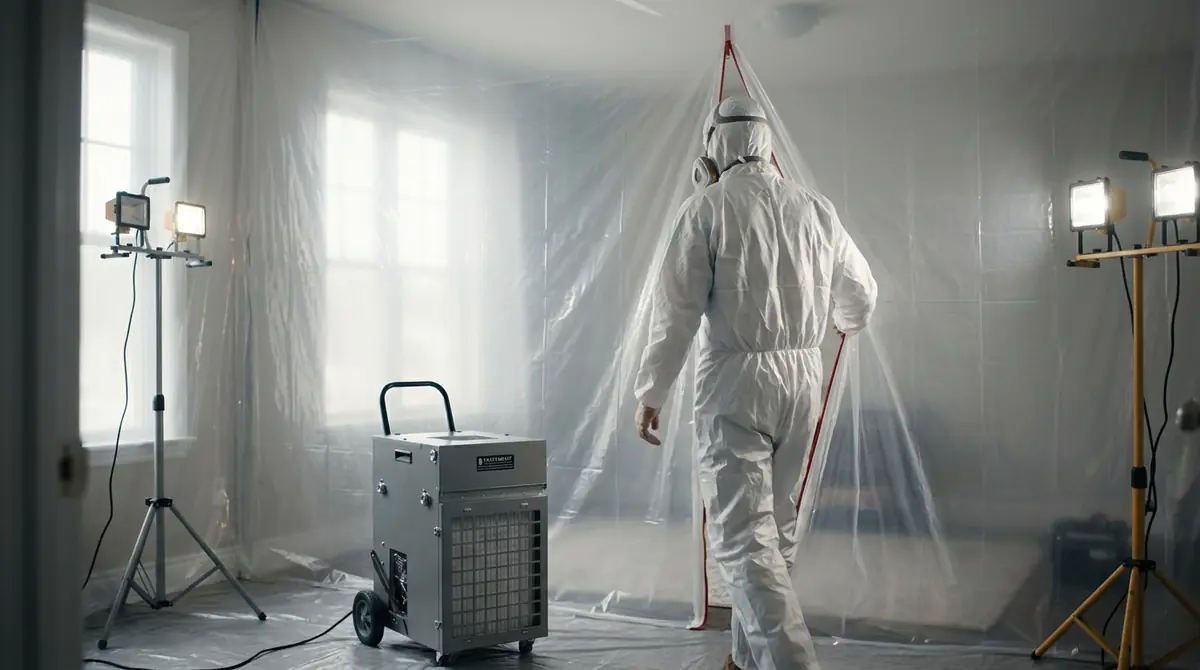
- Locate: the specialist surveys the crawl space, attic or room, takes moisture readings and names the water source.
- Contain: plastic sheeting seals the work zone; EPA calls for limited containment at 10 to 100 sq ft and full containment beyond 100 sq ft.
- Filter: high-efficiency particulate air (HEPA) units clean the air during work, and HEPA vacuums finish dry surfaces.
- Remove: wet insulation and moldy drywall leave in sealed bags; sound framing, ducts and other hard surfaces are cleaned and dried.
- Correct: the drainage, ground cover, roof leak, ventilation or plumbing fault that let moisture in is fixed.
- Confirm: the zone is checked for remaining growth and moisture before insulation or drywall goes back.
Does a Seattle home need a mold test before the work starts?
A Seattle home rarely needs a lab test before mold work starts. CDC does not recommend mold testing, and visible growth is removed whatever its species. Sampling helps when a musty odor has no visible source and when clearance needs proof.
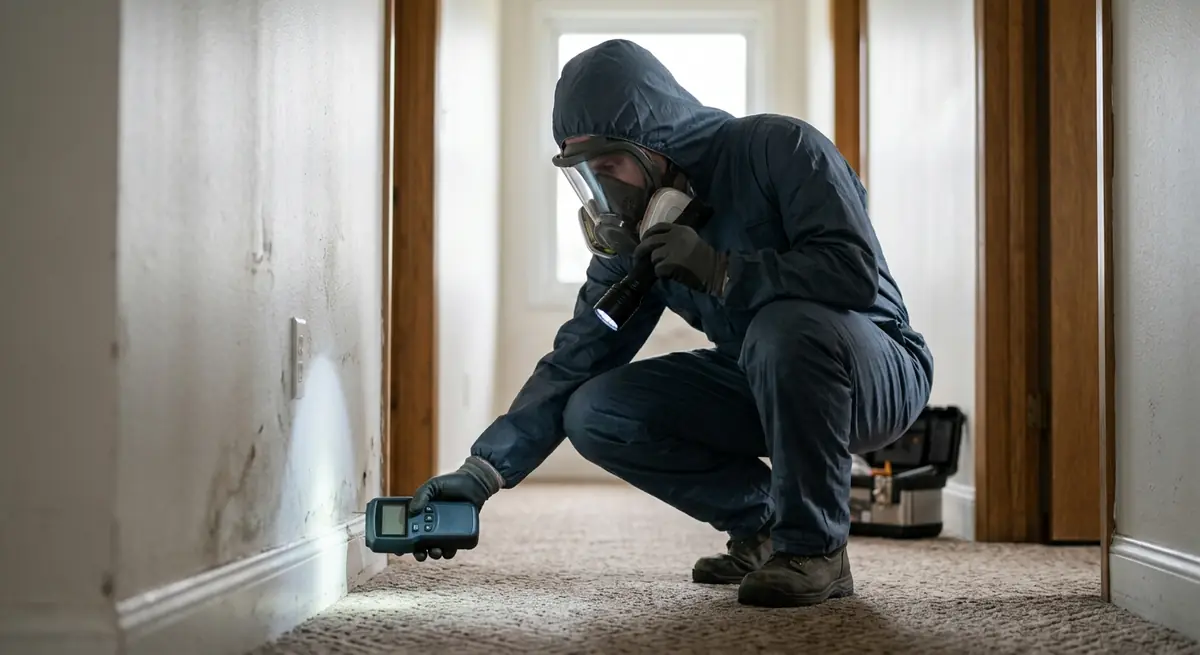
Under a Seattle house a musty odor is the usual first clue, and a crawl space survey with a moisture meter finds the source faster than a spore count. CDC adds that no accepted standard defines an acceptable indoor mold level. Sampling choices, assessor questions and clearance are covered on our page about mold inspection in Seattle.
What changes the cost of mold remediation in Seattle?
Area in square feet sets the base cost of Seattle mold remediation, and crawl space or attic access raises it. Containment level, insulation removal, the moisture fix and clearance testing set the rest, and the local specialist gives the estimate on the call.
Lines to expect on the quote
- Area of growth in square feet, with crawl space and attic measured apart
- Containment level and the number of HEPA units
- Insulation, drywall or subfloor removed, and surfaces cleaned
- The moisture fix: drainage, ground cover, ventilation, roof or plumbing
- The clearance check and the firm that performs it
Red flags
- Pricing tied to a frightening species name; CDC sees no need to identify the type.
- A removal quote that leaves the crawl space moisture source untouched.
- A company that grades its own clearance.
Work under a floor or above a ceiling takes longer than the same area in an open room, since technicians crawl, kneel and pass debris out through one hatch. Published price figures and a full breakdown are on our page about mold removal cost in Seattle.
When is a Seattle mold remediation job done?
A Seattle mold job is done when the moisture source is corrected, the framing and subfloor read dry, and an independent clearance check confirms the area is clean. Skip the moisture correction and the mold returns with the next wet season.
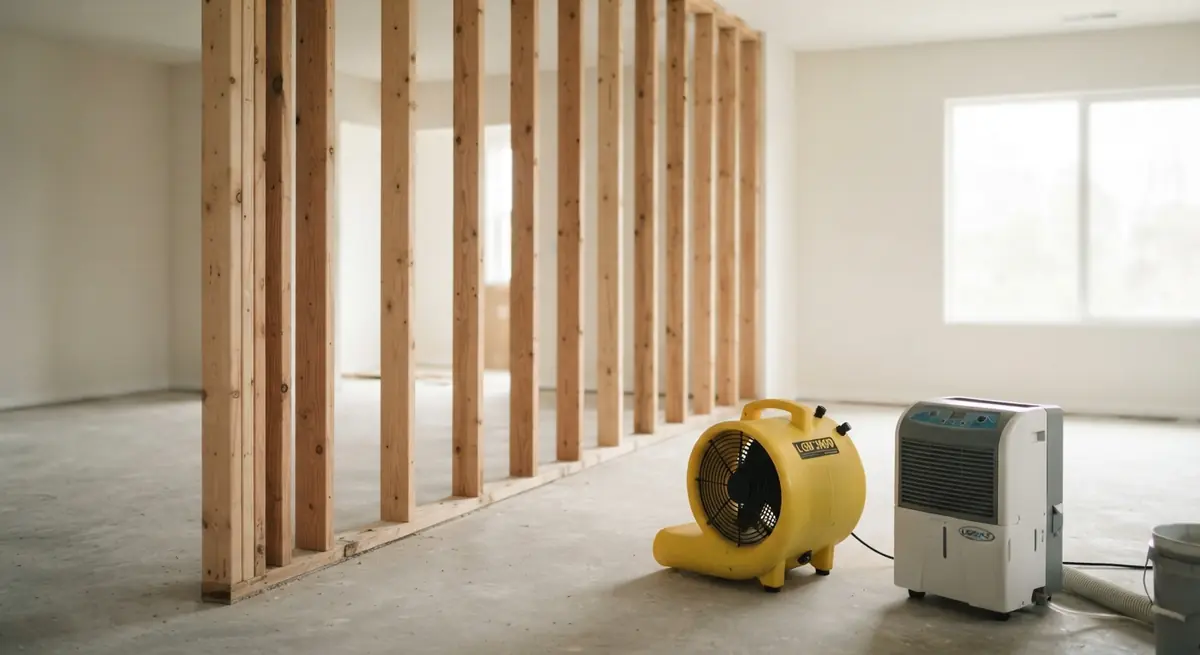
EPA states that mold cleaned up without fixing the water problem comes back. Under a Seattle house, that means standing water is drained, the soil is covered and the joists dry out before new insulation goes in. In the attic it means the roof leak, bath fan duct or missing insulation is addressed before sheathing is treated or replaced. Get the clearance result in writing before anything is closed up.
Which Seattle ZIP codes and nearby towns are covered?
Our network covers 35 Seattle ZIP codes, from 98101 to 98199, and calls from 13 nearby towns: Medina, Mercer Island, Bellevue, Kirkland, Redmond, Kenmore, Bothell, Vashon, Mountlake Terrace, Lynnwood, Edmonds, Woodinville and Gig Harbor. Use the checker below to confirm a ZIP.
Covered Seattle ZIP codes: 98101, 98102, 98103, 98104, 98105, 98106, 98107, 98108, 98109, 98112, 98115, 98116, 98117, 98118, 98119, 98121, 98122, 98125, 98126, 98133, 98134, 98136, 98144, 98146, 98148, 98155, 98164, 98166, 98168, 98177, 98178, 98188, 98195, 98198 and 98199.
| Town | Covered ZIP codes |
|---|---|
| Medina | 98039 |
| Mercer Island | 98040 |
| Bellevue | 98004, 98005, 98006, 98007, 98008 |
| Kirkland | 98033, 98034 |
| Redmond | 98052, 98053 |
| Kenmore | 98028 |
| Bothell | 98011, 98012, 98021 |
| Vashon | 98070 |
| Mountlake Terrace | 98043 |
| Lynnwood | 98036, 98037, 98087 |
| Edmonds | 98020, 98026 |
| Woodinville | 98072, 98077 |
| Gig Harbor | 98329, 98332, 98335 |
Your ZIP code is not listed? Ask the support manager on the call, and you hear right away whether a specialist covers it.
Seattle mold remediation FAQ
How quickly should water in a Seattle crawl space be dried?
Within 24 to 48 hours, the drying window EPA gives for water-damaged areas and items to prevent mold growth. Pump out standing water, find where it enters, and book a specialist when framing or insulation stays wet longer than that.
Does homeowners insurance cover crawl space mold?
Rarely, when the mold comes from slow seepage or long-term dampness. Policies generally cover mold that follows a sudden covered event, such as a burst pipe, and some cap mold payouts. Check the mold limit in your policy before work begins.
Is black mold in a Seattle attic removed differently?
No. CDC states that the type of mold does not need to be identified, so black-looking growth on sheathing gets the same containment, removal and cleaning as any other. The moisture cause decides the plan, not the color.
Does Washington license mold remediation companies?
Washington's Department of Health states there are no specific certification requirements for mold or water damage restoration in the state. Check the company's registration with the Department of Labor & Industries, its insurance and its references before signing.
How do I get a free mold estimate in Seattle?
Call (856) 595-8837. A support manager, available 24/7, takes the details and confirms a booking time, and a local specialist contacts you quickly, sometimes the same day, with the free estimate on that call. No forms are needed.
Mold under the floor, in the attic or a bathroom in Seattle? Call (856) 595-8837. A support manager confirms your booking time, and a local specialist gives the estimate on the call.
Call (856) 595-8837