Mold in a Crawl Space
Mold in a crawl space grows on joists, subflooring and insulation when moisture reaches them, and the fix starts with that moisture. Access shapes the work: guides list crawl space jobs at $500 to $2,000, unverified. Mold Remediation Co. is a referral service. Call (856) 595-8837, a support manager books a time, and a local specialist gives your free estimate and inspection on the call.
- One call, no forms to fill out
- Support manager available 24/7 to confirm your booking time
- Free estimate and inspection, given on the call
- Independent clearance testing available
Support manager first · booking time confirmed · free estimate from the local specialist on the call
No name, phone or email needed. We count anonymous answers, never contact details, to improve this page.
Call (856) 595-8837. A support manager confirms a booking time, and a local specialist gives the estimate on the call.
Mold Remediation Co. is a referral service. We connect you by phone with independent local mold remediation companies, and their technicians perform the work. We are not a contractor.
What is mold in a crawl space?
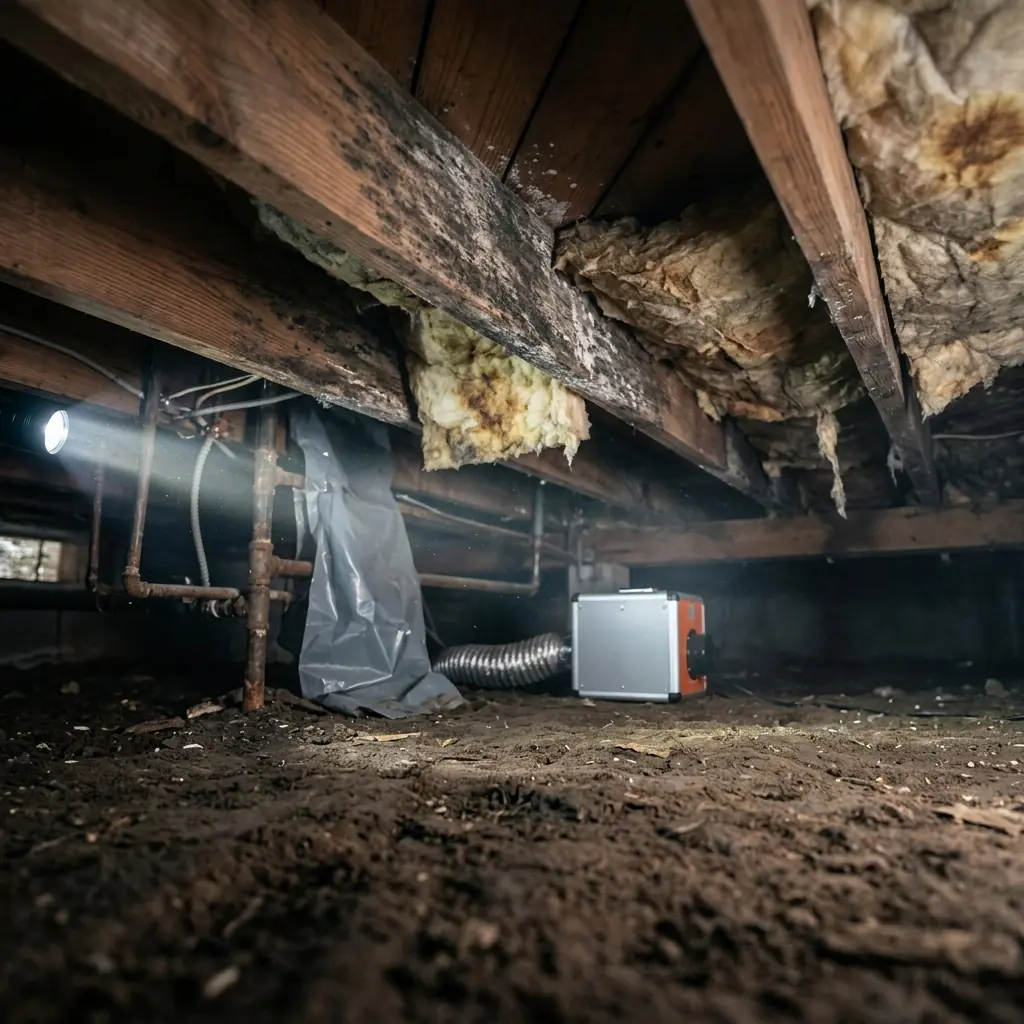
Crawl space mold is fungal growth on the framing, subfloor, insulation or ground cover beneath a raised home. It grows where moisture reaches those materials, and EPA says controlling moisture controls indoor mold. Removing mold without fixing the water brings it back.
A crawl space is the shallow, unfinished area between the ground and the first floor. Most homeowners see it only through a hatch, so growth can spread under the floor long before anything shows inside the house.
A musty smell in the rooms above, a damp feel at the hatch or stained subfloor are reasons to have the space inspected. CDC lists stuffy nose, sore throat, cough, wheeze and burning eyes as possible reactions to mold exposure, and some people have none.
What causes mold in a crawl space?
Moisture causes it. EPA lists roof leaks, gutters and landscaping that direct water toward the building, unvented combustion appliances and deferred maintenance as sources, and plumbing leaks belong on that list. Each wets the wood and insulation below the floor.
- Plumbing leaks: supply and drain lines run through the space, and EPA says to fix leaks as soon as possible.
- Gutters and landscaping: water directed toward the foundation reaches the space from outside.
- Roof leaks: water that gets into the structure can travel down into the framing.
- Unvented combustion appliances: they add moisture to the air they are in.
- Deferred maintenance: a small leak left alone becomes the long-term wetting that growth needs.
The cause decides the repair. A specialist who removes growth and leaves the water source in place has not fixed the crawl space.
How is crawl space mold removed?
A specialist inspects the space, finds and stops the water source, contains the work area, removes or cleans affected materials, dries everything completely, and checks the result. EPA guidance puts the leak repair and complete drying at the center of any cleanup.
- Inspect: the specialist looks at the joists, subfloor, insulation, ground cover and any ductwork, and notes the moisture source.
- Stop the water: the plumbing, drainage or roof problem is repaired by the right trade.
- Contain: the work area is sealed off and filtered so spores stay out of the living space.
- Remove or clean: affected materials are cleaned or taken out, depending on the material.
- Dry: everything is dried completely before anything new goes in.
- Check: the result is checked, and independent clearance testing is available for a separate verification.
Mold of more than about 10 square feet is beyond EPA's homeowner guidance, and a crawl space adds tight access and a floor overhead. Dealing with it from the hatch yourself is not advised.
Which crawl space materials are affected by mold?
Mold in a crawl space lands on 3 materials: wood joists and subfloor, insulation, and the ground cover or any ductwork. The specialist judges each one separately and tells you on the call whether it is cleaned or removed and replaced.
Wood joists and subfloor
Framing is the structure of the floor above. The specialist checks how far growth runs and whether the surface can be cleaned and dried completely.
Insulation
Insulation sits against the subfloor and holds water once it is wet. A specialist decides whether wet or moldy insulation comes out, and replacement is priced as a separate line.
Ground cover and ductwork
A plastic ground cover and any ducts running through the space are inspected with the framing. EPA says to hire a professional when HVAC contamination is suspected, and not to run the system.
The full list of moldy building materials, and how each is handled, is in our guide to moldy building materials.
What drives crawl space mold removal cost?
Access, area, insulation removed, moisture repair and clearance testing drive it. Guides list crawl space jobs at $500 to $2,000, an unverified contractor range, so the local specialist's free estimate on the call sets your actual price.
- Access: hatch size, headroom and the distance equipment must be carried.
- Area: square feet of affected framing and subfloor.
- Materials: insulation or ground cover removed and replaced.
- Water source: the repair is usually a separate trade and a separate bill.
- Clearance: independent testing is its own line.
Guides also note that per-square-foot quotes often exclude moisture repair and rebuild. The full price picture is in our mold remediation cost guide.
Does a vapor barrier or encapsulation stop crawl space mold?
Encapsulation lines the ground and walls of a crawl space with a sealed liner to keep ground moisture out. It does not replace mold removal or leak repair. Ask the specialist whether a liner suits your space, and price it separately.
A liner addresses one moisture source. The plumbing leak, the roof leak and the water at the foundation still need their own fixes, and EPA's rule stands: controlling moisture is what controls mold.
Ask for the liner as a separate line item so you can compare it with the removal scope. Steps to keep mold from returning are in our guide to keeping mold from coming back.
How do you get a specialist for crawl space mold?
Call (856) 595-8837. A support manager confirms a booking time, and a local specialist from the independent network gives the free estimate and inspection on the call. Tell them about the access hatch, any leaks and the area affected.
The network covers cities where crawl space moisture is a leading issue, including mold remediation around Seattle, mold remediation around Portland and mold remediation in and around Nashville. Each city page lists the coverage area for that call.
Crawl space mold FAQ
Is crawl space mold dangerous?
CDC says mold exposure can cause stuffy nose, sore throat, cough, wheeze, burning eyes or skin rash in some people, and nothing in others. People with asthma, mold allergy or weak immune systems face higher risk.
How much does crawl space mold remediation cost?
Contractor guides list crawl space jobs at $500 to $2,000, and those figures are unverified. Access, area, insulation removed, water-source repair and clearance testing move the price. The local specialist gives your estimate free on the call.
Can I clean crawl space mold myself?
EPA says homeowners can usually clean mold under about 10 square feet. A crawl space adds tight access and sometimes plumbing or ductwork nearby, and EPA says to hire a professional for sewage, contaminated water or suspected HVAC contamination.
Do I need a mold test for my crawl space?
CDC does not recommend mold testing, because no accepted standards define an acceptable level. Visible mold is removed and the moisture is fixed, and you do not need to identify the type. Independent clearance testing after the work is available.
Why does crawl space mold come back?
It returns when the moisture source stays. EPA says controlling moisture controls mold, so a leak, a drainage problem or damp air left in place lets growth restart on cleaned wood and insulation, and a repeat cleanup then costs you again.
Mold under the floor? Call (856) 595-8837. A support manager books your time, and a local specialist gives the estimate on the call.
Call (856) 595-8837