Mold in the attic
Attic mold grows on roof sheathing, rafters and insulation when moisture reaches the space under the roof. EPA names roof leaks, insufficient insulation and condensation on cold surfaces as causes. Call (856) 595-8837: a support manager books a time, and a local specialist from our network gives the estimate on the call. This guide covers causes, cleanup, price drivers and airflow fixes.
- One call, no forms to fill out
- Support manager available 24/7 to confirm your booking time
- A specialist contacts you quickly, sometimes the same day
- Free estimate and inspection, given on the call
- Help with insurance claims
Speak to a support manager · confirm a booking time · get the estimate on the specialist's call
No name, phone or email needed. We count anonymous answers, never contact details, to improve this page.
Call (856) 595-8837. A support manager confirms a booking time, and a local specialist gives the estimate on the call.
Mold Remediation Co. is a referral service. We connect you by phone with independent local mold remediation companies, and their technicians perform the work. We are not a contractor.
What is attic mold and where does it grow?
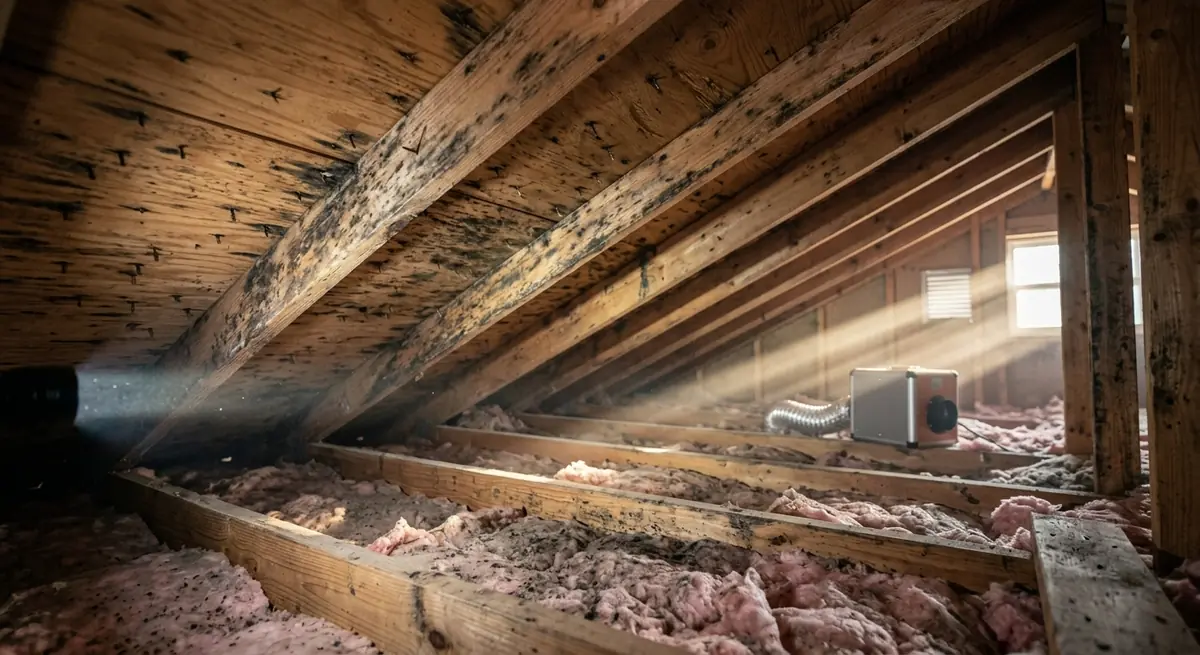
Attic mold is fungal growth on roof sheathing, rafters, insulation or the ceiling below, fed by moisture in the space under the roof. EPA names roof materials as a hidden-mold location, linked to roof leaks and insufficient insulation.
The attic is a hidden-mold location because nobody looks at it for years. Growth starts on the underside of the roof deck, where moisture collects first, and spreads along rafters and into insulation.
What causes mold in an attic?
Attic mold has 3 documented causes: roof leaks, insufficient insulation, and condensation on cold surfaces. Warm indoor air that escapes into the attic meets cold roof sheathing and leaves moisture on it. EPA also advises venting moisture-producing appliances outdoors.
- Roof leaks: water enters at flashing, vents or damaged roofing and wets the sheathing and insulation below.
- Insufficient insulation: warm indoor air reaches the underside of the roof deck and condenses.
- Condensation on cold surfaces: sheathing, pipes and duct runs stay cold through a long heating season and collect moisture.
A bath fan or dryer duct that ends in the attic instead of outside adds moisture to the same space. EPA advises venting moisture-producing appliances to the outside.
How do you spot mold in an attic?
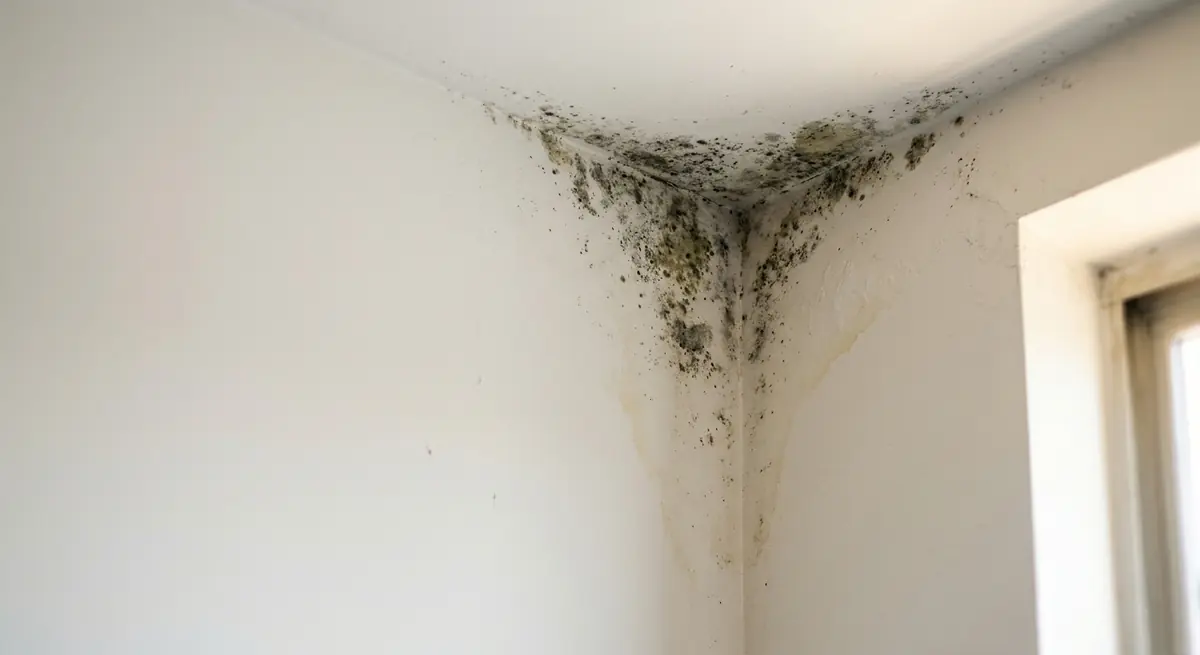
Dark staining on roof sheathing, damp or flattened insulation, and a musty odor are the signs of attic mold. Look from the access hatch with a flashlight and keep the insulation undisturbed. EPA advises against painting over moldy surfaces.
A stain on the ceiling below the attic points to water above it. The inspector confirms with moisture readings and traces the source before any removal starts. Our guide to mold inspection vs mold testing explains which findings need a lab sample.
How is attic mold removed?
A specialist removes attic mold in 5 moves: inspect the sheathing, rafters and insulation; contain the work area; clean wood with HEPA vacuums and detergent and water; bag and discard moldy insulation; repair the moisture source. EPA's containment tiers size the work zone.
Roof sheathing and rafters
Hard wood surfaces are scrubbed with detergent and water and dried completely, then vacuumed with a HEPA vacuum. Sheathing that stays soft or stained after cleaning is replaced, and the quote names which boards.
Insulation
EPA's water-damage table lists wet fiberglass and cellulose insulation for discard and replacement. The specialist bags it inside containment, so the spores stay in the work area.
Ceiling drywall below
Moldy drywall is a removal item in the same table. The assessment shows whether the growth reached the ceiling below.
Our guide to moldy building materials sorts every material into clean or remove.
What drives the price of attic mold removal?
Attic mold removal price depends on 5 drivers: the affected area in square feet, access through the hatch, the insulation to remove and replace, the containment level, and the moisture fix. A roofer or ventilation contractor often bills the repair separately.
- Area: the measured square feet of growth set the containment level: limited for 10 to 100 square feet, full above 100.
- Access: technicians work on their knees and bag debris out through a hatch.
- Insulation: loose insulation moves before the sheathing is reached, and wet insulation is replaced.
- Moisture fix: a roof repair or airflow change appears as its own line.
- Clearance check: a final check is a separate line or a separate bill.
The specialist gives the estimate for your attic on the call.
How do you stop attic mold from coming back?
Attic mold stays gone only when the moisture source is fixed: the roof leak repaired, the dryer vent ducted outside, and insulation added where warm air reaches cold sheathing. EPA states that cleanup without fixing the water problem lets mold return.
Ask for the clearance result in writing before new insulation or sheathing goes in. Our guide to keeping mold from coming back covers the upkeep that follows a finished job.
Where can you get attic mold fixed?
One call to (856) 595-8837 reaches a support manager, who confirms a booking time. A local specialist from our network then gives the attic estimate on the call. City pages list covered ZIP codes and local mold drivers.
Condensation on cold surfaces drives attic mold in cities with long heating seasons. See mold remediation in and around Denver and Arvada mold remediation.
Mold in the attic FAQ
Can I clean attic mold myself?
EPA marks about 10 square feet, roughly 3 ft by 3 ft, as the homeowner limit. Growth above that size, or with significant water damage, calls for professional help, and hard surfaces are scrubbed with detergent and water and dried completely.
Does attic mold mean the roof is leaking?
A roof leak is 1 of 3 documented causes. Insufficient insulation and condensation on cold surfaces also feed attic mold, so the inspector takes moisture readings and traces the actual source instead of assuming the roof is at fault.
Should I paint over mold on roof sheathing?
No. EPA advises against painting or caulking over moldy surfaces, because the growth stays underneath and the moisture source stays unfixed. The surface is cleaned or the board replaced, and the water problem is repaired first.
Do I need a mold test for attic mold?
Testing is unnecessary in most cases where mold is visible, per EPA, and CDC does not recommend mold testing. Samples help when a musty odor has no visible source or when a finished job needs a clearance check.
Does homeowners insurance cover attic mold?
Homeowners insurance usually covers mold only when a sudden covered event, such as a burst pipe, caused it, and it usually excludes long-term leaks and humidity. Policies often cap mold payouts, so read the mold limit first.
Mold in the attic? Call (856) 595-8837. A support manager books your time, and a local specialist gives the estimate on the call.
Call (856) 595-8837