Mold inspection vs mold testing
A mold inspection finds the growth and the water behind it, and mold testing sends air or surface samples to a lab. CDC does not recommend mold testing, so most homes need an inspection first. Call (856) 595-8837: a support manager books the visit, and a local specialist from our network gives the estimate on the call. Inspection-only calls are accepted. This guide compares the two side by side.
- One call, no forms to fill out
- Support manager available 24/7 to confirm your booking time
- A specialist contacts you quickly, sometimes the same day
- Free estimate and inspection, given on the call
- Independent clearance testing available
- Inspection-only calls are accepted
Describe what you see or smell · pick a booking time · hear the inspection estimate from the specialist
No name, phone or email needed. We count anonymous answers, never contact details, to improve this page.
Call (856) 595-8837. A support manager confirms a booking time, and a local specialist gives the estimate on the call.
Mold Remediation Co. is a referral service. We connect you by phone with independent local mold remediation companies, and their technicians perform the work. We are not a contractor.
What is the difference between a mold inspection and mold testing?
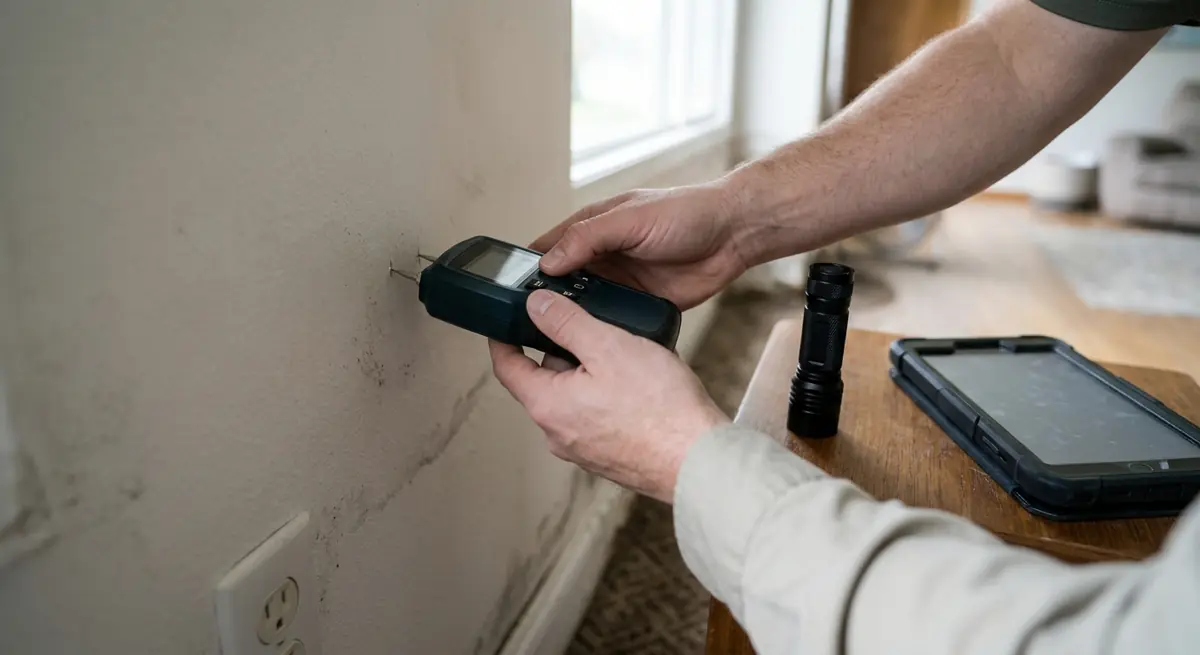
A mold inspection is a visual survey with moisture readings that finds the growth and its water source. Mold testing is lab sampling of air or surfaces. EPA calls sampling unnecessary in most cases where mold is visible, so the inspection comes first.
| Attribute | Mold inspection | Mold testing |
|---|---|---|
| Method | Visual survey, moisture meter and humidity readings, odor tracing | Air or surface samples sent to a laboratory |
| Result | Location and size of growth, wet materials, the water source | Mold types and spore counts in the sampled air or on the sampled surface |
| Benchmark | Visible damage and the moisture content of each material | No federal limit: EPA states no standards exist for airborne mold |
| Best use | Visible growth, a stain, a recent leak | Musty odor with no visible source; a check after remediation |
| Output | A map of affected areas that sets the removal scope | A lab report that confirms hidden growth or a clean result |
What does a mold inspection check?
A mold inspection checks 5 things: visible growth, the moisture content of building materials, indoor humidity, musty odors with no visible source, and the water source behind each wet area. Those findings set where removal starts and how large the work area is.
EPA lists moisture meters and humidity meters as investigation tools. The inspector reads a stain or a musty wall first, and drywall comes open only where the numbers point to wet material.
Findings you keep
Ask for the findings in writing: each affected area with its approximate size in square feet, the moisture readings, the water source and any lab results. That record becomes the scope a remediation company prices.
When is mold testing worth paying for?
Mold testing pays off in 2 situations: a musty odor with no visible source, where samples help locate hidden growth, and the end of a remediation job, where samples confirm the area was cleaned. Visible growth needs removal instead of a lab result.
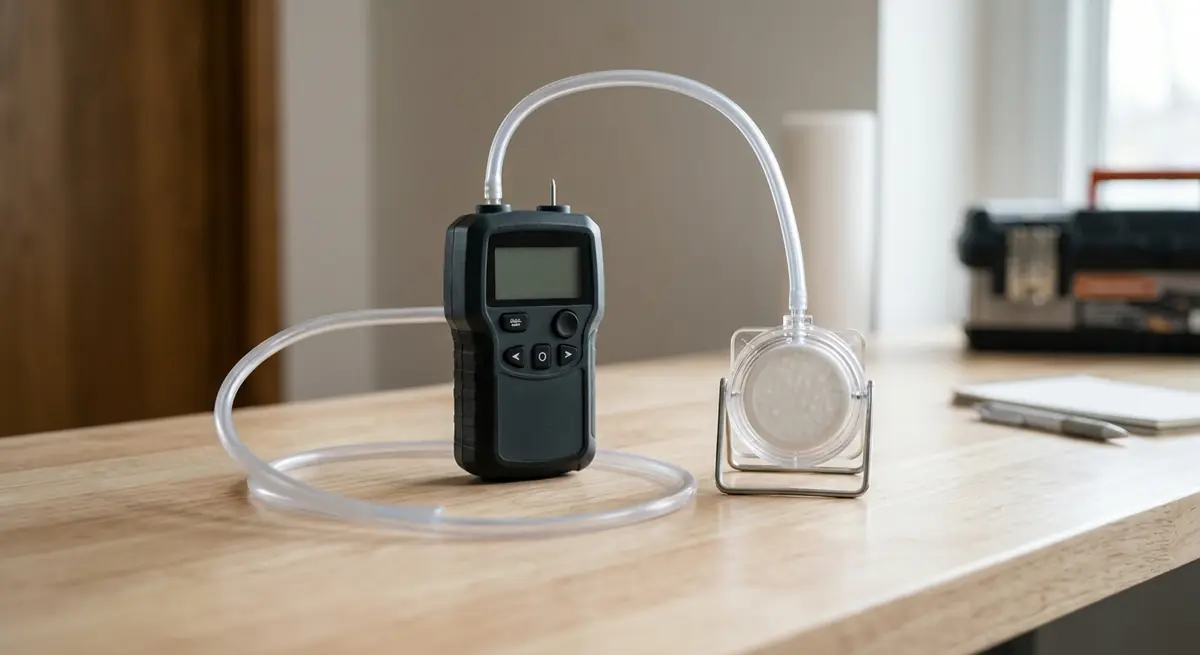
Air samples and surface samples
An air sample pulls a measured volume of indoor air through a collection cassette, and the lab reports the mold types and counts it caught. A surface sample, taken by swab or tape lift, shows what grows on one spot. EPA names surface sampling as a way to check whether an area was adequately cleaned, and advises that professionals with specific experience in mold sampling protocols design and read the samples.
Sampling adds little for
- Visible growth: the mold comes out whatever the lab result says.
- Species names: CDC finds no reason to identify which mold is growing.
- Health questions: CDC states that sampling cannot show who will get sick.
Does CDC recommend mold testing?
CDC does not recommend mold testing. No accepted standards define an acceptable mold level in a home, and sampling cannot show who gets sick. CDC advises removing the mold and fixing the moisture, with no need to identify the type.
EPA reaches the same conclusion on standards: no federal limits exist for airborne mold or mold spores. A spore count has nothing official to be measured against, so the useful questions are where the growth is, how large it is and what keeps it wet.
Is a home mold test kit worth buying?
A home mold test kit reports growth or spore counts that have no federal benchmark: EPA sets no limits for airborne mold, and CDC finds no accepted standard for an acceptable level. A kit result leaves the plan for visible growth unchanged.
A kit does not locate the water source or measure moisture in the wall, which are the two findings that set the remediation scope. Visible mold of about 10 square feet or less falls within homeowner cleanup per EPA. Larger areas, or a musty odor with no visible source, call for an inspection.
How do inspection and testing fit after remediation?
A clearance check after remediation confirms that the water problem is fixed, no visible mold or moldy odor remains, and any samples show indoor mold types and levels similar to outdoor air. An inspector from a different company gives the most independent result.
Clearance is where testing earns its cost. Our guide to independent mold clearance covers timing and failed checks, and our guide to hidden mold warning signs covers the odors and stains that justify an inspection before any cleanup.
What drives the price of a mold inspection or test?
Mold inspection and testing prices depend on 4 drivers: the number of areas checked, access through a crawl space hatch or attic panel, the lab samples taken, and a separate clearance visit. The local specialist gives the estimate on the call.
- Area count: a single bathroom wall takes less time than a whole-house survey.
- Access: crawl space and attic work goes through a hatch and on knees.
- Lab samples: each air or surface sample carries its own laboratory charge.
- Clearance visit: a check after remediation is separate from the first inspection.
Where can you book a mold inspection?
One call to (856) 595-8837 books a mold inspection with a local specialist from our network. A support manager confirms the time, and the specialist gives the estimate on the call. Inspection-only calls are accepted, with no removal required.
City pages list state rules for inspectors and the ZIP codes we cover. Start with Miami, FL mold assessment, booking a Dallas mold inspector or mold inspection in San Diego.
- mold inspection in Atlanta
- Denver mold testing
- mold inspection in Henderson
- Boise mold testing
- Nashville mold testing
Mold inspection vs mold testing FAQ
Should I test for mold before removal?
Testing before removal is optional in most homes. EPA calls sampling unnecessary in most cases where mold is visible, and CDC does not recommend mold testing. Order a test for a musty odor with no visible source or for a check after cleanup.
Does a mold inspection include lab samples?
A mold inspection is a visual survey with moisture and humidity readings, and lab samples are an add-on. Samples go to a laboratory for hidden growth or a post-cleanup check, and each sample carries its own laboratory charge.
Can a mold test tell me which mold I have?
A lab report names mold types and counts, but CDC finds no need to identify the type. Every species is removed the same way, and CDC states that sampling cannot show whether a person will get sick.
Who should do the clearance check after remediation?
An inspector from a company that did not perform the removal gives the most independent result, because the firm that did the work is not grading its own job. Our network offers independent clearance testing on request.
Do I need an inspection if I can see the mold?
Visible mold under about 10 square feet falls within homeowner cleanup per EPA. A larger patch, or growth after a leak, calls for an inspection that finds the water source, measures moisture and sizes the work area before cleanup starts.
Need a mold inspection, not a removal yet? Call (856) 595-8837. A support manager books your time, and a local specialist gives the inspection estimate on the call.
Call (856) 595-8837