Mold Inspection in Denver, CO
A mold inspection in Denver, CO starts with one call to (856) 595-8837, where a support manager confirms a booking time. A local specialist from our network then contacts you quickly, sometimes the same day, and gives the estimate on that call. The visit follows moisture from the attic roof deck to the basement walls and pipe chases, and adds lab samples only for hidden growth or clearance proof.
- One call, no forms to fill out
- Support manager available 24/7 to confirm your booking time
- A specialist contacts you quickly, sometimes the same day
- Free estimate and inspection, given on the call
- Inspection-only calls are accepted
- Insured and certified network technicians
- Help with insurance claims
- Independent clearance testing available
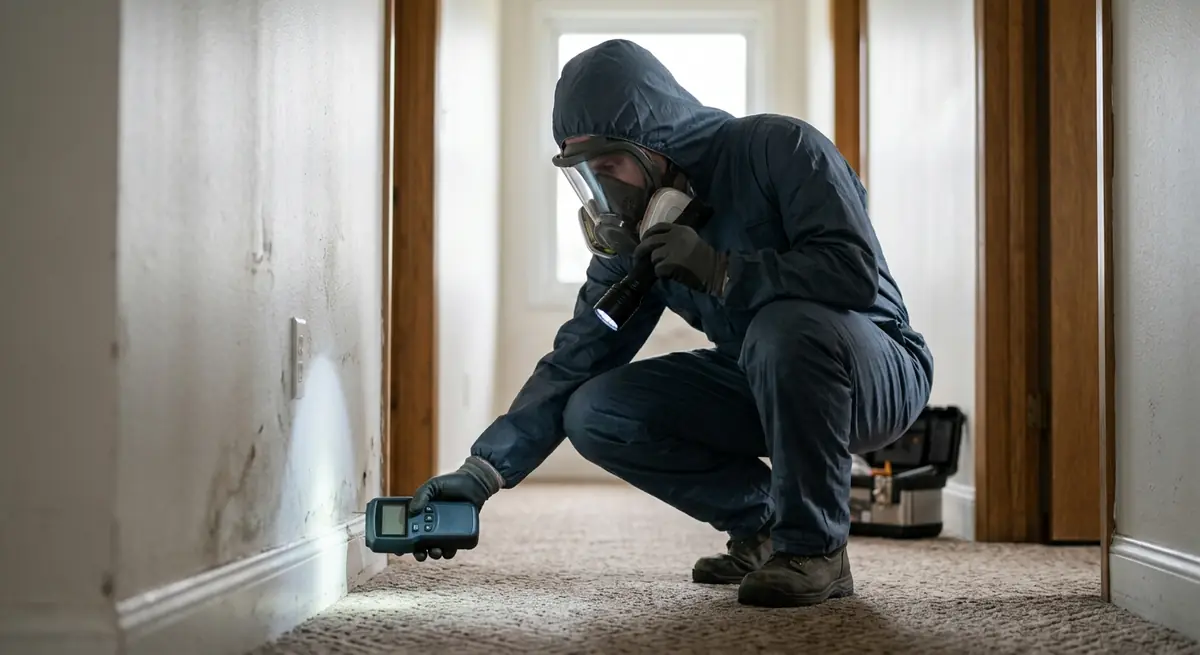
Tell the support manager what you notice · confirm a time · hear the inspection estimate from the specialist
No name, phone or email needed. We count anonymous answers, never contact details, to improve this page.
On the call, describe the odor or stain, the rooms involved, and the date of any leak, roof drip or earlier mold job.
Mold Remediation Co. is a referral service. We connect you by phone with independent local mold inspection and remediation companies, and their technicians perform the work. We are not a contractor.
Quick recap
- Suits: Denver owners with a musty basement, attic staining, a past leak, or a finished job that needs a clearance check.
- Areas covered on the visit: attic, basement, plumbing walls, furnace and ducts, plus any room you name.
- Lab work: added to find hidden growth or to support clearance, not to name a species.
- How to book: call (856) 595-8837; inspection-only calls are accepted.
- Area: 39 Denver ZIP codes plus Commerce City, Dupont, Henderson and Brighton.
Is a mold inspection or a mold test right for a Denver home?
A mold inspection suits most Denver homes: an on-site survey with moisture readings that locates the growth and the water feeding it. A mold test is lab analysis of samples, which EPA calls unnecessary in most cases with visible mold.
| Question | Mold inspection | Mold test (lab sampling) |
|---|---|---|
| What is measured | Visible growth, material moisture, indoor humidity, odor sources | Mold types and counts in a sample of air or on a swab or tape lift |
| Tools | Moisture meter, humidity meter, flashlight, access to attic and basement | Sampling pump and cassette, or surface sampling kit, plus a laboratory |
| What it answers | Where the mold is, how large the area is, and what keeps it wet | Whether hidden growth is likely, or whether a cleaned area matches outdoor air |
| Official limit to compare against | Not needed: the finding is the growth itself | None: EPA states no federal limits exist for mold or spores in air |
| When a Denver owner needs it | Attic stains, basement dampness, a recent leak | A musty odor with no visible source, or a clearance check after removal |
CDC does not recommend mold testing, and adds that sampling cannot tell you whether someone will become sick. A test earns its place after the work is done: our guide to mold clearance testing explains how post-removal samples and visual checks confirm a job passed.
How do you book a mold inspection in Denver?
You book a Denver mold inspection with one call to (856) 595-8837. The support manager asks what you see or smell and where, then confirms a booking time. A local specialist contacts you quickly, sometimes the same day, with the inspection estimate.
- Call (856) 595-8837 and describe the odor, stain or leak.
- Confirm the booking time with the support manager.
- Take the specialist's call and hear the estimate for the visit and any samples.
Get the house ready
- Clear the attic hatch and a path to it, and pull stored boxes about 2 ft away from basement walls.
- Leave stains as they are. EPA advises against painting or caulking moldy surfaces, and a painted stain hides what the inspector needs to see.
- Keep suspect wallpaper or paneling in place, because EPA warns that removing it over hidden growth releases a burst of spores.
- List roof repairs, plumbing leaks, basement water and any earlier mold work, with dates.
- Switch off a furnace that blows musty air; EPA advises against running a system suspected of contamination.
What does a mold inspector look at in a Denver house?
A mold inspector in a Denver house checks 5 areas: the attic roof deck and insulation, basement walls and floors, walls around plumbing, the furnace and ducts, and windows on outside walls. Each stain gets a moisture reading and a traced source.
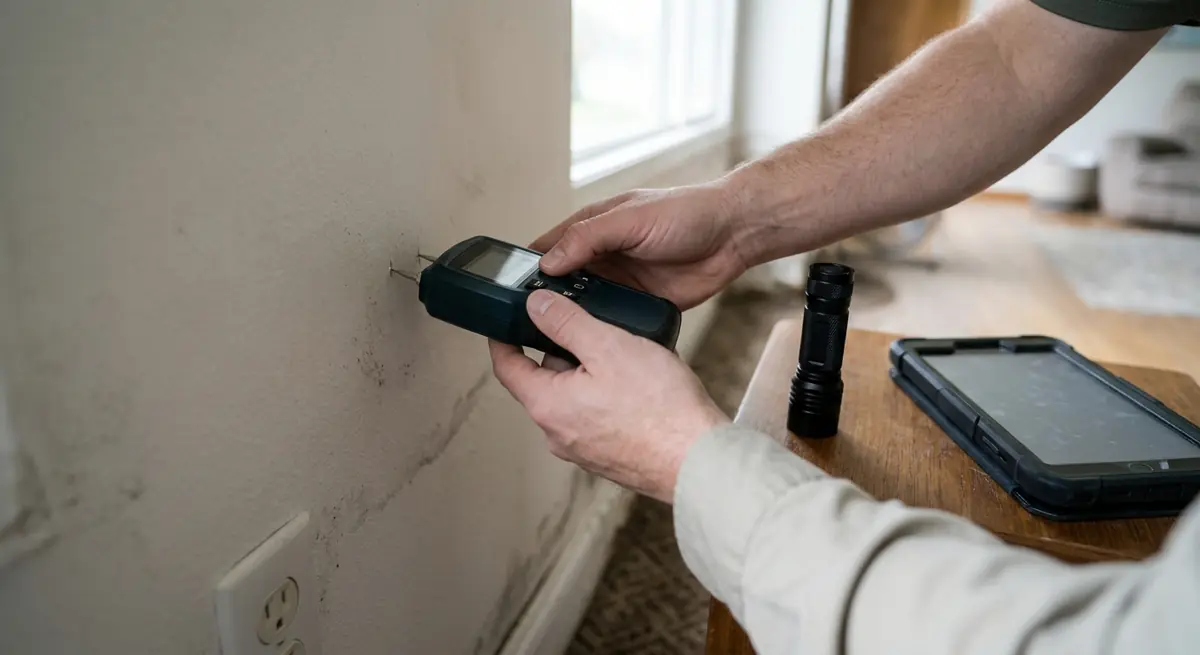
| Area | Checked on the visit | Reason it matters in Denver |
|---|---|---|
| Attic | Underside of the roof deck, rafters, insulation, roof penetrations, dryer and fan duct ends | The Denver Water Dept station logs about 5,260 heating degree days a year; EPA links mold in roof materials to roof leaks or insufficient insulation |
| Basement | Foundation walls, slab, finished drywall, carpet and pad, stored items against walls | EPA lists the back side of drywall and the underside of carpets and pads as hidden-mold spots |
| Plumbing walls | Drywall near supply and drain lines, sink cabinets, tub and toilet walls | EPA names the inside of walls around pipes as a frequent hidden-mold location |
| Furnace and ducts | Air handler, supply and return ducts, registers | EPA lists ductwork as a hidden-mold location and advises against running a contaminated system |
| Windows and outside walls | Frames, sills, wall corners on the coldest sides | EPA treats condensation on cold surfaces as a sign of high indoor humidity |
Numbers taken on site
EPA lists moisture meters and humidity meters as investigation tools. The inspector reads the moisture content of sheathing, drywall and framing around each stain, and compares indoor relative humidity with EPA's target of below 60 percent, ideally 30 to 50 percent. Walls are opened only where the readings show wet material behind them.
Flood history on the west side
Denver's covered ZIPs account for 500 National Flood Insurance Program claims since 1978, and ZIP 80214 alone accounts for 97 of them. In a home with a past flood claim, the inspector checks the lower wall cavities and the basement framing that took on water, even where the paint looks clean.
The written report
Ask for every affected area with its size in square feet, the moisture readings, the water source and any lab results. The remediation company prices from that report, and a later clearance check is measured against it.
When does mold testing make sense in Denver?
Mold testing makes sense in Denver in 2 cases: a musty basement, closet or attic with no visible growth, where samples help locate hidden mold, and the close of a remediation job, where samples support clearance. Visible mold needs removal, not testing.
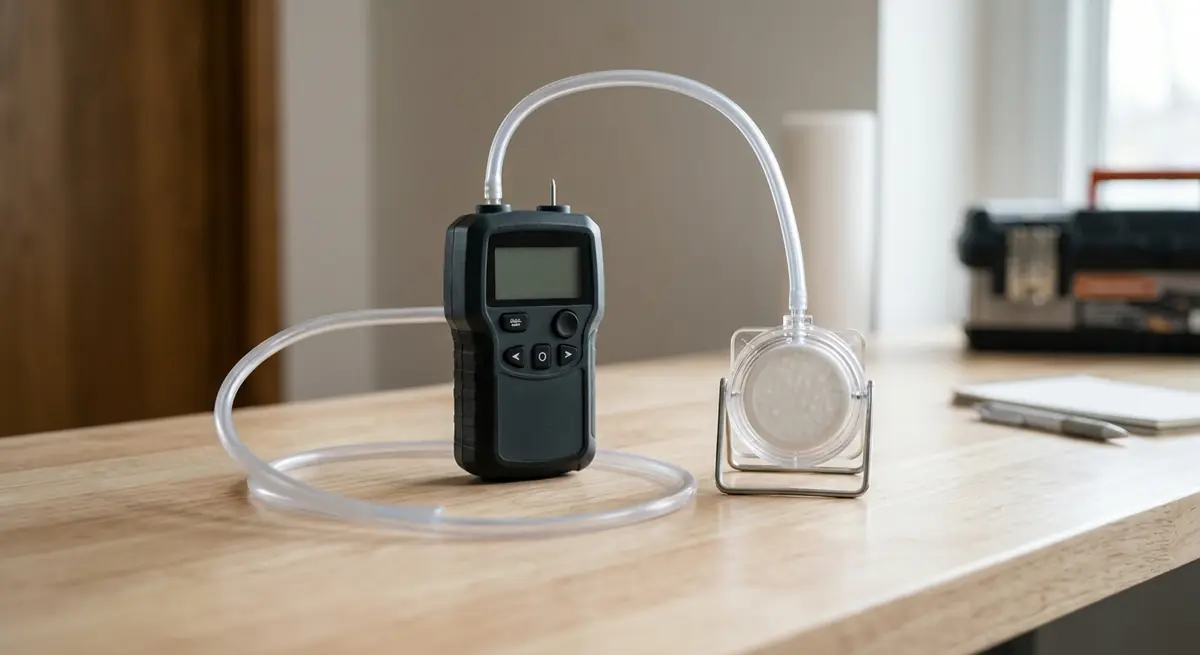
Cases where a lab result changes nothing
- Growth you can see: EPA calls sampling unnecessary in most of these cases, because the growth is removed either way.
- Species questions: CDC sees no need to identify the type of mold before removal.
- Spore limits: EPA has set no federal limits for mold or spores, and CDC notes there is no accepted standard for an acceptable indoor level.
- Health predictions: CDC states you cannot rely on sampling and culturing to know whether someone might become sick.
How samples are taken
An air sample draws a set volume of indoor air through a cassette, and an outdoor sample taken the same day gives the baseline; EPA's goal after cleanup is indoor mold types and levels similar to outdoors. A surface sample by swab or tape lift shows what grows on one spot, and EPA uses surface sampling to judge whether an area was cleaned adequately. EPA also advises that sampling plans be designed and interpreted by professionals experienced in mold sampling.
Does Colorado license mold inspectors?
We have not found a Colorado state mold-specific license; contractor licensing is handled at the city or county level in many places, so check with your local building department. A Denver owner therefore picks the inspector on training, lab practice and independence.
No official Colorado agency statement on mold inspector licensing turned up in our research, so this page describes no state rule. Put 4 questions to the inspector before the visit:
- Training: what mold training the inspector has completed, and through which organization.
- Lab: which laboratory reads the samples, and whether an outdoor comparison sample is part of every air test.
- Independence: whether the inspecting firm also sells removal, and who would check that work.
- Report: whether the findings come in writing, with areas in square feet and moisture readings.
What does a Denver clearance inspection confirm?
A Denver clearance inspection confirms 4 things after remediation: the water source is fixed, no visible mold or moldy odor remains, damaged materials are gone or clean and dry, and any samples show indoor mold types and levels similar to outdoor air.
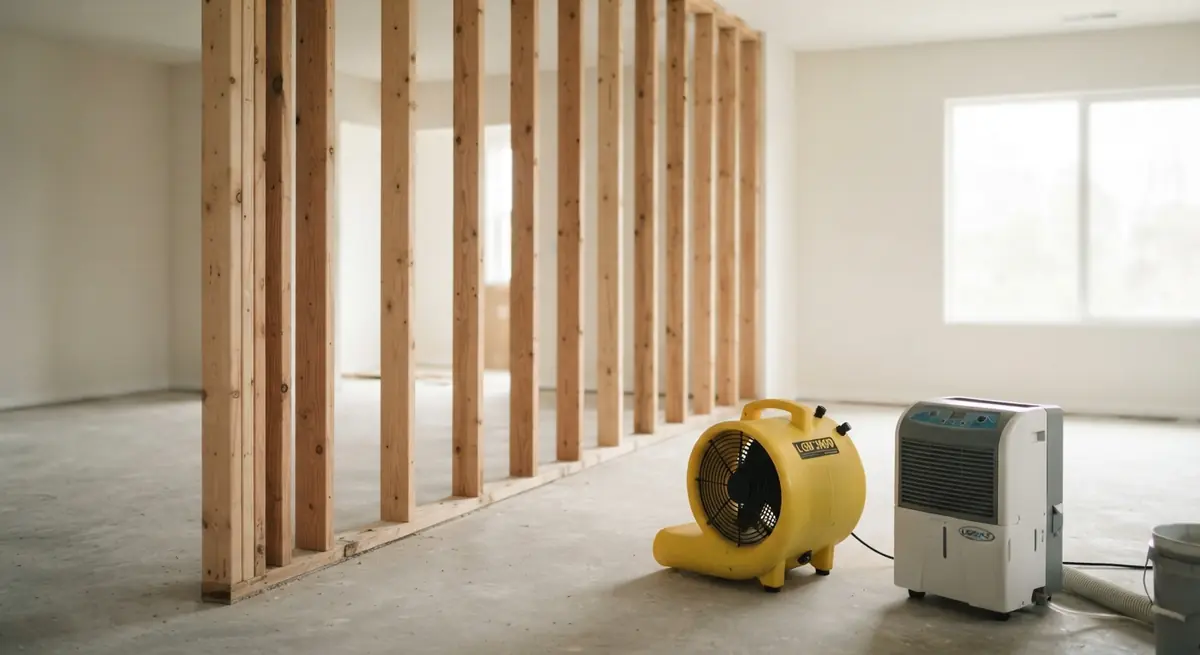
EPA adds a fifth sign, people using the space without health complaints, and calls the final decision a judgment call. With no Colorado rule on record for clearance, write the pass criteria and the name of the clearance inspector into the remediation contract before work begins.
Timing the visit
Schedule clearance while containment is still standing and before new insulation goes into the attic or new drywall goes onto basement walls. An area that fails is cleaned again inside the same enclosure, then checked again. An inspector from a firm that did not do the removal gives the most independent result.
How much does a mold inspection cost in Denver?
This page lists no Denver mold inspection fee, because we have not verified a published local figure. The local specialist gives the estimate on the call, priced by the number of areas, attic or basement access, and lab samples taken.
What moves the inspection fee
- Scope: one basement room costs less than a whole-house check from attic to basement.
- Access: an attic with deep insulation or a tight hatch adds time.
- Samples: every air or surface sample carries a lab charge, and an air test includes an outdoor sample.
- Return visit: a clearance check after removal is a second, separate visit.
Inspection and removal are priced apart. Area, containment, tear-out and the repair of the water source set the mold removal cost in Denver, where national price figures and a quote checklist are listed.
What comes after a Denver mold inspection finds growth?
The Denver inspection report becomes the remediation scope: square feet of growth, containment level, materials to remove or clean, and the repair of the roof leak, basement seepage or pipe. Patches under about 10 square feet stay within homeowner cleanup under EPA guidance.
EPA sets limited containment for 10 to 100 square feet and full containment above 100 square feet, so the measured area decides how the work zone is sealed. Removal steps, Denver climate and flood data, and the full list of covered ZIP codes are on our page about mold remediation in Denver. The same call to (856) 595-8837 books both the inspection and the removal estimate.
Denver mold inspection FAQ
Can a spore count show whether my Denver home is safe?
No. EPA has set no federal limits for mold or spores, so a count has no official benchmark, and CDC states that sampling cannot show whether someone will become sick. The inspection finds growth and moisture, which is what remediation removes.
Can I book a Denver mold inspection without a removal quote?
Yes. Inspection-only calls are accepted. Tell the support manager at (856) 595-8837 that you want the inspection alone, and the local specialist gives the estimate for that visit on the call, with no removal work booked yet.
Will the inspector cut holes in my walls?
Only where readings call for it. Moisture meters read drywall and framing from the surface, so the inspector opens a wall only where the numbers show wet material behind it. That keeps the patch work after the visit small.
How soon after a basement leak should I book an inspection?
Book it right after the water stops. EPA advises drying water-damaged areas and items within 24 to 48 hours to prevent mold growth, and an early visit shows which materials are drying and which already hold water.
Does one visit cover both the attic and the basement?
Yes, when you name both areas on the call. The support manager notes every area you list, and the specialist's estimate covers the whole visit, so a Denver house with attic staining and a damp basement gets one inspection.
Musty basement, attic stains or a job that needs clearance in Denver? Call (856) 595-8837. A support manager confirms your booking time, and a local specialist gives the inspection estimate on the call.
Call (856) 595-8837