Mold Inspection in Toledo, OH
A mold inspection in Toledo, OH is booked with one call to (856) 595-8837. The support manager confirms a time, and a local specialist from our network contacts you quickly, sometimes the same day, with the inspection estimate. The visit traces dampness through basement walls and floors, ceilings under the roof and walls around pipes, and adds lab samples only for hidden growth or clearance.
- One call, no forms to fill out
- Support manager available 24/7 to confirm your booking time
- A specialist contacts you quickly, sometimes the same day
- Free estimate and inspection, given on the call
- Inspection-only calls are accepted
- Licensed, insured and certified network technicians
- Independent clearance testing available
- Written warranty on the work
Tell the support manager what you see or smell · confirm a booking time · hear the inspection estimate from the specialist
No name, phone or email needed. We count anonymous answers, never contact details, to improve this page.
On the call, describe the odor, stain or water event, which rooms it affects, and when it started.
Mold Remediation Co. is a referral service. We connect you by phone with independent local mold inspection and remediation companies, and their technicians perform the work. We are not a contractor.
Quick recap
- Suits: Toledo owners with a musty basement, a ceiling stain, a past leak or flood, or a finished job that needs checking.
- Checked: basement walls and floor, the ground outside the foundation, ceilings under the roof, walls around pipes, furnace and ducts.
- Lab samples: used to find hidden growth or confirm clearance, not to name the species of visible mold.
- Booking: one call to (856) 595-8837; inspection-only calls are accepted.
- Area: 15 Toledo ZIP codes plus Sylvania, Maumee, Perrysburg, Oregon and 21 more nearby towns.
Does a Toledo home need a mold inspection or a lab test?
Start with the inspection. It is a visual and moisture survey that locates growth, wet materials and the water source. A lab test only samples air or surfaces, and EPA states that sampling is unnecessary in most cases where mold is visible.
| Question | Inspection | Lab test |
|---|---|---|
| What it uses | Eyes, a moisture meter, a humidity meter and the nose for musty odor | An air pump with a cassette, or a swab or tape lift, plus a laboratory |
| What you learn | Where growth is, how far it spreads, which materials are wet, where water enters | Which mold types the sample caught, and how many spores |
| What it is compared with | Dry readings in the same material elsewhere in the house | An outdoor sample from the same day; EPA sets no federal limit for airborne mold |
| When it fits a Toledo home | A stained basement wall, a ceiling spot under a roof leak, a damp sink cabinet | A musty basement with nothing visible; proof of clearance after removal |
| What it produces | The removal scope: areas, square feet and the water source | A lab report showing hidden growth or a clean result |
Testing earns a second role at the end of a job, when a finished remediation is checked before anything is rebuilt. Our guide to post-remediation verification explains that final check and who should run it.
How do you book a mold inspection in Toledo by phone?
Call (856) 595-8837 and tell the support manager what you see or smell, where, and for how long. Once you confirm a booking time, a local specialist contacts you quickly, sometimes the same day, and gives the inspection estimate on that call.
- Explain the stain, odor or water event to the support manager.
- Confirm the booking time offered to you.
- Take the specialist's call for the inspection estimate, including any lab samples.
Before the inspector arrives
- Pull boxes and shelving back from stained or damp basement walls so the foundation can be reached.
- Leave mold and stains as they are. EPA warns against painting or caulking over moldy surfaces.
- Keep paneling and wallpaper in place over suspected growth; EPA notes that removing wallpaper with mold on its underside can release a massive burst of spores.
- Write down when the basement last took water, and when any roof or pipe leak happened.
- Tell the support manager whether you need a first inspection or a clearance check after removal.
What does a mold inspector check in a Toledo house?
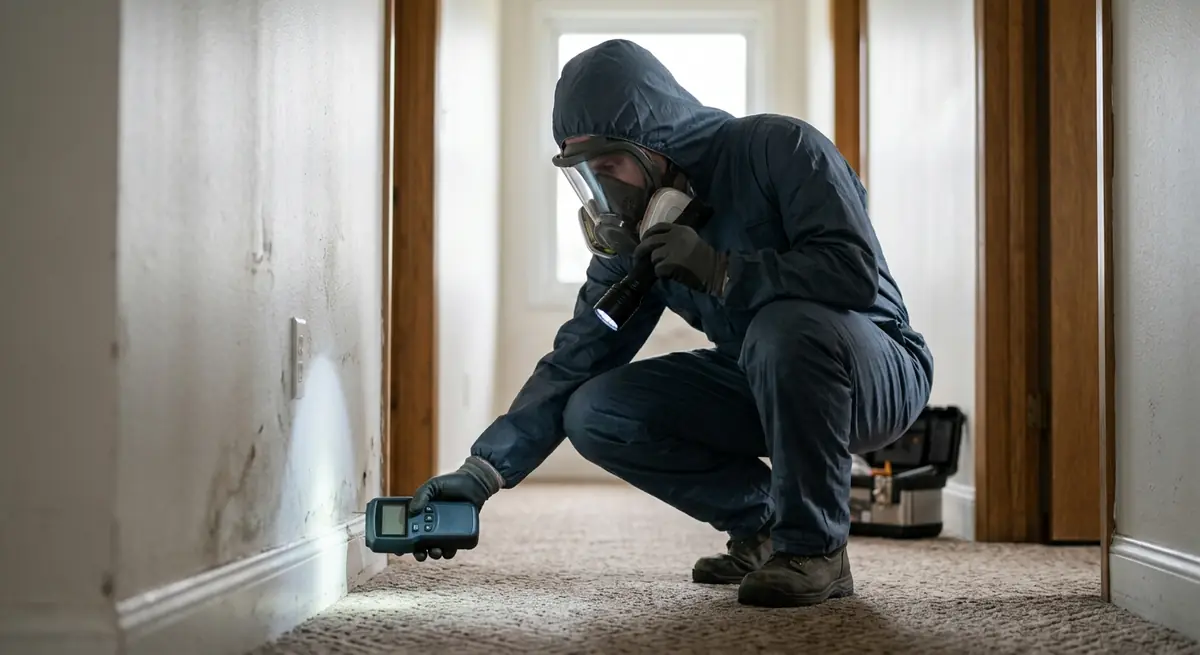
A Toledo mold inspector checks basement walls and floors first, then ceilings under the roof, walls and cabinets around pipes, and the furnace and ductwork. At each spot the inspector looks for growth, measures moisture and humidity, and traces the water source.
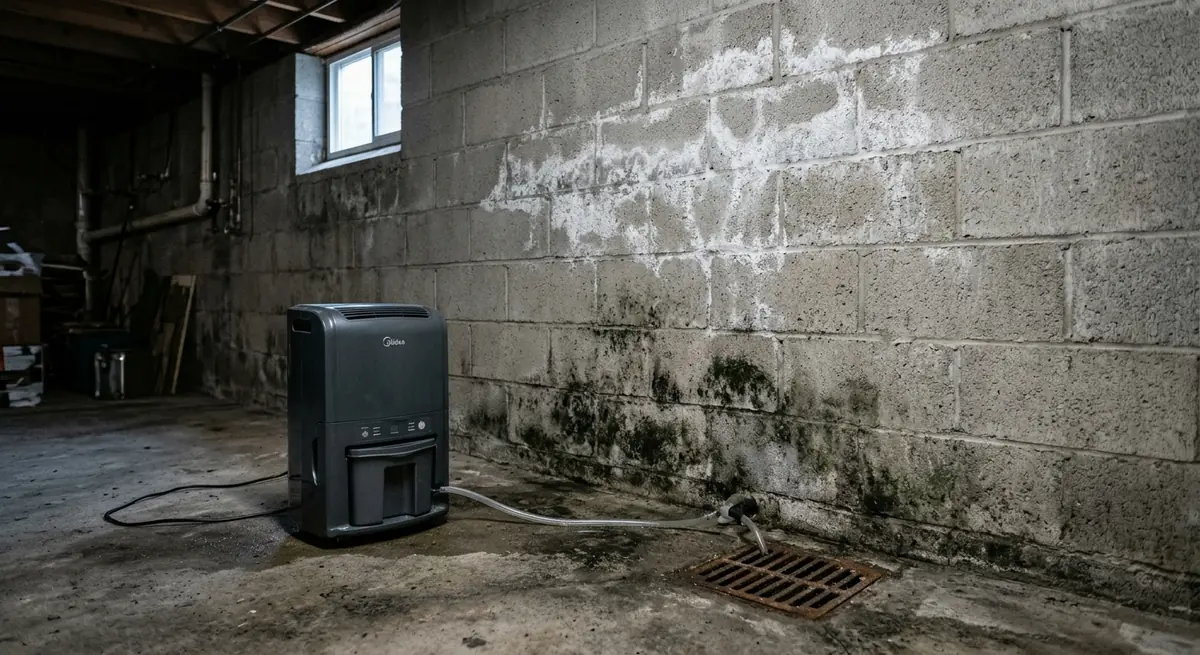
| Area | What is checked | Why it is on a Toledo checklist |
|---|---|---|
| Basement walls and floor | Concrete or block walls, the floor, the base of finished drywall, carpet and pad, stored boxes | Basement moisture leads Toledo's local mold issues, and EPA lists the underside of carpets and pads as a hidden-mold spot |
| Outside the foundation | Ground slope, downspouts and gutters | EPA advises ground that slopes away from the foundation and gutters that are cleaned and repaired |
| Ceilings and attic under the roof | Top-floor ceiling stains, roof sheathing, insulation | Toledo Metcalf Field averages 32.4 inches of precipitation a year, and CDC names leaks in roofs as a place mold grows |
| Walls and cabinets around pipes | Drywall near supply and drain lines, under-sink cabinets, exposed basement plumbing | EPA lists the inside of walls around leaking or condensing pipes as a hidden-mold location |
| Furnace and ductwork | Air handler, supply and return ducts, registers | EPA lists ductwork as a hidden-mold spot and advises against running a system suspected of contamination |
Meters before demolition
Moisture meters read how much water sits in drywall, wood and other materials, and humidity meters measure the air; EPA lists both as investigation tools. In a Toledo basement, readings taken along the base of the walls and across the floor help show whether water rises from the foundation, runs down from above or comes from a dripping pipe, all before a wall is opened.
A written record
Ask for the findings on paper: each affected area with its square feet, the readings, the suspected water entry and any lab results. A remediation company prices from that record, and a later clearance check is measured against it.
When should a Toledo home pay for mold testing?
Pay for mold testing in 2 situations: a musty odor with no visible source, where samples help find hidden growth, and the end of a remediation job, where samples help confirm clearance. Visible growth on a basement wall needs removal, not a test.
Where a test adds little
- Growth you can see: EPA calls sampling unnecessary in most of these cases; the mold is removed whatever the result.
- Naming the species: CDC sees no need to identify the type, and removal follows the same steps.
- A "safe" number: EPA has set no federal limits for airborne mold or spores, so a count cannot pass or fail against a standard.
- Health predictions: CDC states that you cannot rely on sampling and culturing to know whether someone might become sick.
How the 2 sample types differ
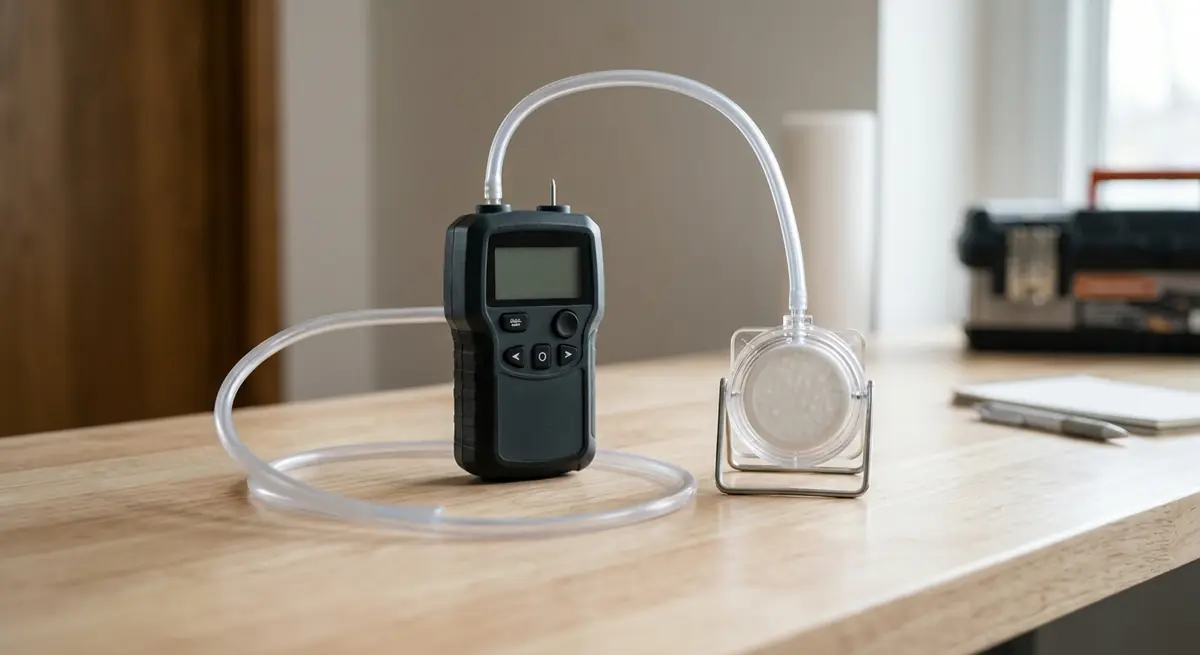
Air sampling draws a measured volume of indoor air through a cassette, and the lab identifies and counts what it caught. The result means little without an outdoor sample from the same day, since EPA's benchmark after cleanup is indoor mold types and levels similar to the outdoor air. Surface sampling lifts material from one spot with a swab or tape and shows what grows there; EPA names it as a way to judge whether an area was cleaned adequately. EPA also advises that sampling be planned and interpreted by professionals experienced in mold sampling protocols.
Does Ohio license mold inspectors?
Ohio's Department of Health offers mold cleanup guidance, and we have not found a state mold-specific license for inspectors or remediators. Until a state credential is confirmed, judge the Toledo inspector by training, laboratory and independence.
The Ohio Department of Health (ODH) publishes that guidance on its Healthy Homes Program page, "Emergency Flood Cleanup and Mold". Check any rule with the agency before relying on it for a specific property.
Ask 3 questions when you book:
- Training: what mold training the inspector has completed, and through which organization.
- Laboratory: which lab reads the samples, and whether an outdoor comparison sample is part of the plan.
- Separation: whether the inspecting company also does removal work, and who checks the finished job.
What does a clearance check prove after Toledo mold removal?
A clearance check proves 3 things after removal: the water problem is fixed, no visible mold, moldy material or musty odor remains, and any samples show indoor mold types and levels like the outdoor air. It is the inspection that closes the job.
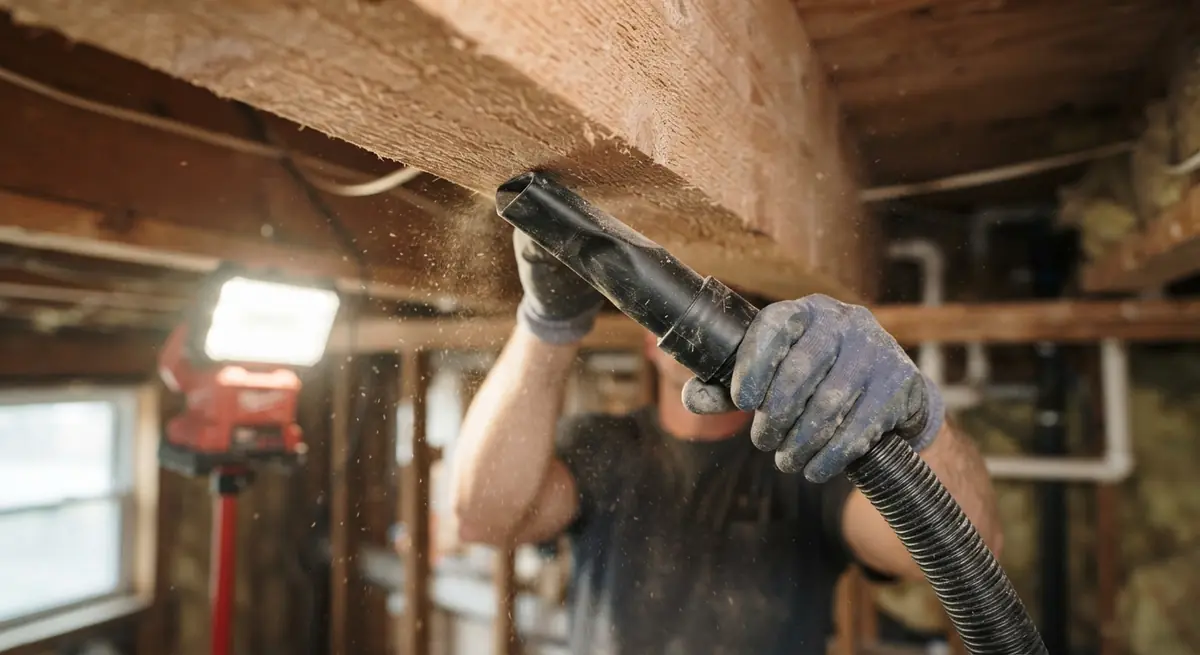
EPA adds a fourth sign, that people can occupy the space again without health complaints, and describes the final decision as a judgment call. Write the pass criteria into the contract before work starts, so the owner and the remediation company agree on what clearance means.
Who should run it
An inspector from a company that did not do the removal gives the cleanest result. Book the check while containment is still standing and before drywall, insulation or carpet goes back into the basement, so a failed spot can be cleaned again inside the same enclosure.
If the check fails
The report names the spot that still shows growth, a damp reading or a high sample. That area is cleaned or removed again and rechecked, and the written pass result is what closes the job.
What does a mold inspection cost in Toledo?
The inspection and estimate through our network are free. Lab sampling, when a Toledo home needs it, is a separate decision: the specialist explains on the call whether samples are worth taking and what they involve before anything is booked.
What widens an inspection
- Number of areas: one stained basement wall takes less time than a survey from the foundation to the attic.
- Access: finished basement walls, packed storage and attic hatches slow the visit.
- Lab samples: each air or surface sample goes to a laboratory, and an air test needs an outdoor comparison sample.
- Clearance visit: the check after remediation is a second visit, separate from the first inspection.
Inspection and removal are priced apart. Square footage, containment, tear-out and the water-source repair set the mold removal cost in Toledo, and that page lists the lines a complete removal quote should carry.
What comes after a Toledo inspection finds mold?
The findings turn into the removal scope: square feet, containment level, materials to take out or clean, and the water-source repair. EPA places patches under about 10 square feet within homeowner cleanup, so larger areas go to a remediation crew.
EPA ties containment to that measured area: limited containment for 10 to 100 square feet and full containment beyond 100. The removal steps, Toledo's basement and flood drivers, and the covered ZIP codes are on our page about mold remediation in Toledo. The same call to (856) 595-8837 books both the inspection and the removal estimate.
Toledo mold inspection FAQ
Can I book a mold inspection in Toledo without a removal quote?
Yes. Inspection-only calls are accepted, and the inspection and estimate are free. Tell the support manager that you want an inspection with no removal booked, and mention the rooms involved, so the specialist plans the visit around them.
How soon after a basement flood should I book an inspection?
Book once the water is out and drying has started. EPA's table targets drying within 24 to 48 hours, and notes that growth may occur even when materials dry within 48 hours, so an inspection confirms what drying alone cannot.
What does CDC say about testing a home for mold?
CDC does not recommend mold testing. It notes there are no accepted standards for an acceptable amount of mold, and that sampling cannot tell you whether someone might become sick. Removing the growth and fixing the moisture comes first.
Can an inspection find mold behind basement paneling or under carpet?
Yes. EPA lists the back of paneling and the underside of carpets and pads among hidden-mold locations. Moisture readings and a musty odor point the inspector to them, and a small opening or a lifted carpet corner confirms what is there.
Should the inspector and the remediation company be different firms?
It is the owner's call, and it pays off at clearance. We have not found an Ohio mold-specific license setting that rule, so write it into the contract: an inspector from a firm that did not do the removal checks the work.
Musty basement, ceiling stain or a finished job to check in Toledo? Call (856) 595-8837. The support manager sets the time, and a local specialist gives the inspection estimate on the call.
Call (856) 595-8837