Mold in Air Ducts and HVAC Systems
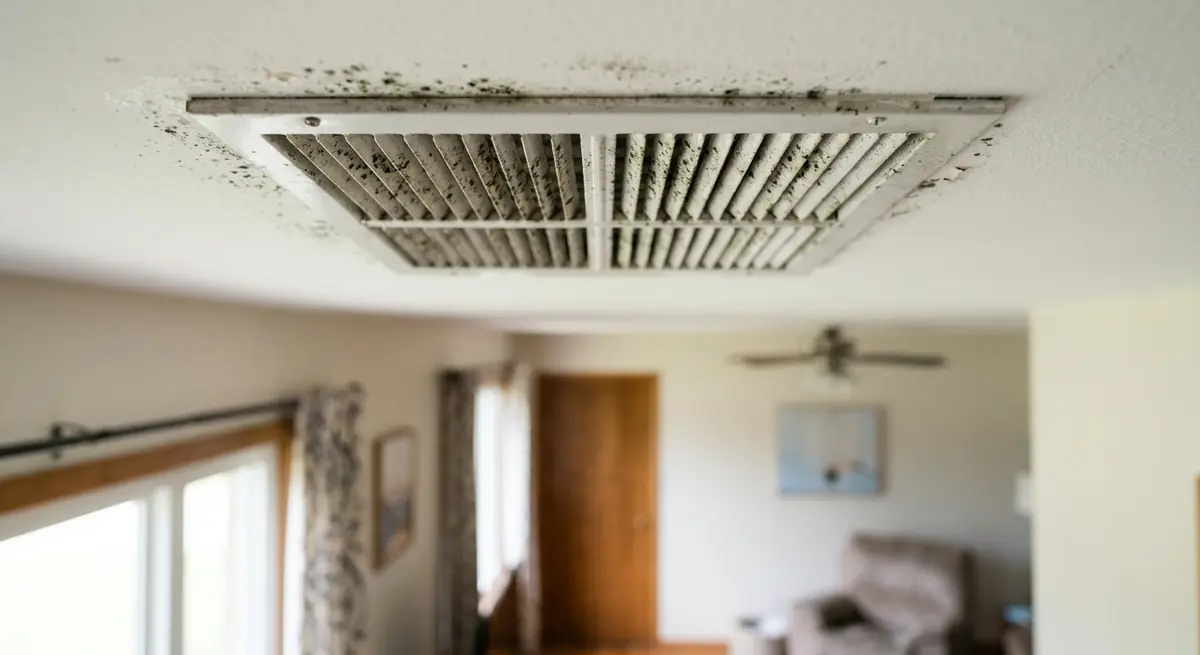
EPA says to hire a professional, and not run the system, when HVAC mold contamination is suspected. Turn the unit off and have it inspected. Guides list HVAC mold work at $3,000 to $10,000, an unverified range. Mold Remediation Co. is a referral service: call (856) 595-8837, a support manager books a time, and a local specialist gives your free estimate and inspection on the call.
- One call, no forms to fill out
- Support manager available 24/7 to confirm your booking time
- Free estimate and inspection, given on the call
- Independent clearance testing available
Support manager first · booking time confirmed · free estimate from the local specialist on the call
No name, phone or email needed. We count anonymous answers, never contact details, to improve this page.
Call (856) 595-8837. A support manager confirms a booking time, and a local specialist gives the estimate on the call.
Mold Remediation Co. is a referral service. We connect you by phone with independent local mold remediation companies, and their technicians perform the work. We are not a contractor.
Should you run an HVAC system with mold in it?
No. EPA says to hire a professional when HVAC contamination is suspected and not to run the system. Turn the unit off, leave the ducts alone, and have a mold specialist inspect the air handler and ductwork before the system runs again.
Signs that point to the system include visible growth at a vent, a musty smell when the system starts, and moisture around the unit. The 10 square foot homeowner rule from EPA does not apply here, because EPA places suspected HVAC contamination in the hire-a-professional group.
While you wait for the inspection, keep the system off. If anyone in the home has asthma, a mold allergy or an immune condition, CDC lists them as higher-risk groups, and EPA says to see a health professional first when health is a concern.
Where does mold grow in an HVAC system?
Mold grows where moisture collects in the system: the cooling coil, the drain pan, the vents and the ductwork. Condensation is the usual source, and EPA lists ductwork among the places moisture problems show up. Each part is inspected separately.
Cooling coil and drain pan
The coil cools the air, and the pan collects the condensation that forms. A pan that stays wet gives growth the moisture it needs.
Vents and registers
Vents are the visible end of the system. Growth at a vent can come from the duct behind it or from condensation at the vent itself.
Ductwork
Ducts run through walls, attics and crawl spaces, so the cause may sit outside the system. Ductwork in a damp crawl space or attic is inspected together with that space.
The wider list of moisture causes, including humidity and condensation, is in our guide to humidity and condensation mold.
What does HVAC mold cleaning involve?
A specialist inspects the air handler, coil, drain pan, vents and ducts, finds the moisture source, cleans or replaces contaminated parts, and confirms the result. HVAC work is its own scope, separate from cleaning walls, framing or ceilings.
- Inspect: the specialist checks each component and notes where moisture collects.
- Stop the moisture: a clogged drain, a leak or a condensation problem is repaired.
- Clean or replace: contaminated parts are cleaned, or replaced when cleaning is not enough.
- Dry: the components are dried completely before the system runs.
- Check: the result is checked, and independent clearance testing is available.
What drives the cost of HVAC mold removal?
System size, how far growth spread, access to the ductwork, parts replaced, and repair of the moisture source drive the cost. Guides list HVAC mold work at $3,000 to $10,000, unverified, so the specialist's estimate on the call sets your price.
- System size: more ducts and vents mean more to inspect and clean.
- Extent: growth limited to one vent is a different job from growth through the ductwork.
- Access: ducts in an attic, wall or crawl space take longer to reach.
- Parts: a coil or pan that is replaced adds a parts line.
- Moisture repair: the drain or leak fix is usually a separate trade.
The full ranges by room, with their sources, are in our mold remediation cost guide.
Can mold in the vents make you sick?
CDC says mold exposure can cause stuffy nose, sore throat, cough, wheeze, burning eyes or skin rash in some people, and no symptoms in others. A system that circulates air through the home is one more reason to have it inspected promptly.
People with asthma, mold allergy, a weakened immune system or chronic lung disease face higher risk, according to CDC. EPA says to see a health professional first when health is a concern.
The symptom list, the higher-risk groups and what CDC says about testing are in our guide to mold exposure symptoms.
How do you get an HVAC mold inspection?
Call (856) 595-8837. A support manager confirms a booking time, and a local specialist from the independent network gives the free estimate and inspection on the call. Keep the unit off until the inspection is done.
Cities in the network where heavy air conditioning use makes HVAC moisture a leading issue include Dallas mold remediation and mold remediation around Las Vegas. Each city page lists the coverage area for the call.
HVAC mold FAQ
Can I clean mold from my vents myself?
EPA places suspected HVAC contamination in the hire-a-professional group and says not to run the system. Wiping a visible vent does not address growth inside the duct, the coil or the drain pan, so a specialist inspects the whole system.
Do I need to test my air ducts for mold?
CDC does not recommend mold testing, because no accepted standards define an acceptable level. Visible mold or a musty smell from the system is enough reason for a specialist to inspect it, and testing is not required first.
How much does HVAC mold removal cost?
Contractor guides list HVAC mold work at $3,000 to $10,000, and those figures are unverified. System size, extent, access, replaced parts and moisture repair move the price. The local specialist gives your estimate free on the call.
What should I do while waiting for an inspection?
Turn the HVAC unit off and keep it off, per EPA's advice not to run a system suspected of contamination. Note where you see growth or smell mustiness, and have those details ready for the call.
Mold in the vents? Call (856) 595-8837. A support manager books your time, and a local specialist gives the estimate on the call.
Call (856) 595-8837