Mold in the bathroom
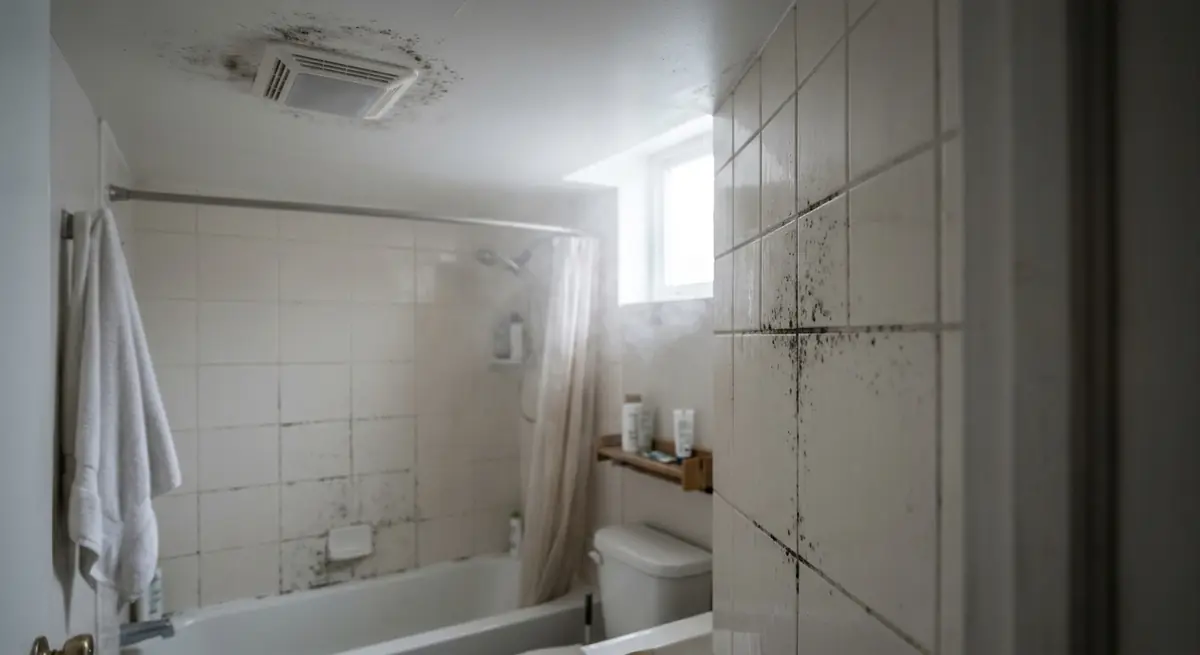
Bathroom mold is a cleaning job on grout and caulk under about 10 square feet, and a leak or ventilation problem when it sits behind tile, on the ceiling or under the floor. EPA ties indoor mold to moisture, and this guide separates the cleaning job from the leak. Call (856) 595-8837: a support manager books a time, and a local specialist from our network gives the estimate on the call.
- One call, no forms to fill out
- Support manager available 24/7 to confirm your booking time
- A specialist contacts you quickly, sometimes the same day
- Free estimate and inspection, given on the call
Describe what you see or smell · pick a booking time · get the estimate on the specialist's call
No name, phone or email needed. We count anonymous answers, never contact details, to improve this page.
Call (856) 595-8837. A support manager confirms a booking time, and a local specialist gives the estimate on the call.
Mold Remediation Co. is a referral service. We connect you by phone with independent local mold remediation companies, and their technicians perform the work. We are not a contractor.
What causes mold in a bathroom?
Bathroom mold has 3 documented causes: moisture from showers that stays on surfaces, condensation on cold surfaces, and plumbing leaks. EPA controls indoor mold by controlling moisture, so an exhaust fan that does not move steam outside or a slow leak feeds it.
- Shower steam: moisture condenses on cool walls, ceilings, grout and caulk.
- Condensation on cold surfaces: EPA lists cold surfaces and pipes as a moisture source.
- Plumbing leaks: a supply line, drain or tub seal that drips keeps a wall cavity or subfloor wet.
What can you clean yourself, and where does cleaning stop?
Homeowners clean hard bathroom surfaces such as grout, tile and tubs by scrubbing with detergent and water and drying completely, per EPA, when the area is under about 10 square feet. Cleaning stops at porous materials, hidden growth and recurring mold.
What cleaning covers
EPA's guidance for hard surfaces is detergent and water, then complete drying. The plumbing leak is fixed first, and the page does not mention bleach.
Where cleaning stops
- Growth above about 10 square feet, or with significant water damage.
- Mold that comes back after cleaning, which signals an unfixed moisture source.
- Porous materials such as moldy drywall, which EPA's water-damage table lists as a removal item.
- Moldy surfaces: EPA advises against painting or caulking over them.
Our guide to which moldy materials must be removed covers each material.
How do you stop bathroom mold from coming back?
Bathroom mold stays gone when the leak is repaired, wet surfaces dry completely, and steam leaves the room through the bathroom fan or an open window. EPA states that cleanup without fixing the water problem lets mold return.
EPA advises using exhaust fans that vent outside and venting moisture-producing appliances to the outside. An exhaust duct that ends in the attic moves the steam to another hidden-mold location. Ask for the written clearance result before new tile, drywall or flooring goes back.
Mold on the bathroom ceiling or grout is one of the common indoor mold types, and the cleanup steps are the same for every type.
What drives the price of bathroom mold removal?
Bathroom mold removal price depends on 4 drivers: the area of growth in square feet, the materials to remove such as ceiling drywall, the leak or fan duct repair, and the clearance check. The specialist gives the estimate on the call.
- Area: the measured square feet set the containment level.
- Materials: hard surfaces are cleaned; porous materials come out and are replaced.
- Leak repair: a plumber's line is billed separately from the mold work.
- Clearance check: a final check is a separate line or a separate bill.
Where can you get bathroom mold checked?
One call to (856) 595-8837 reaches a support manager, who confirms a booking time. A local specialist from our network then gives the estimate on the call. City pages list covered ZIP codes and local mold drivers.
Humid and coastal climates keep bathrooms damp longest. See mold remediation around San Diego or bathroom mold help in Miami.
Mold in the bathroom FAQ
Is mold on bathroom grout dangerous?
CDC states that mold exposure causes a stuffy nose, sore throat, cough or wheeze, burning eyes or skin rash in some people, and nothing in others. People with asthma, mold allergy, immune compromise or chronic lung disease face higher risk.
Does mold behind bathroom tile need a professional?
Mold behind tile needs a professional because the leak or moisture source sits inside the wall. EPA marks about 10 square feet as the homeowner limit, and hidden growth with water damage calls for an inspection and moisture readings.
Can I use bleach on bathroom mold?
EPA's cleanup guidance for hard surfaces is scrubbing with detergent and water and drying completely, and it does not mention bleach. Cleaning without fixing the leak or the ventilation lets the mold return, per EPA, so repair comes first.
Do I need a mold test for a moldy bathroom ceiling?
Testing is unnecessary in most cases where mold is visible, per EPA, and CDC does not recommend mold testing. An inspection with moisture readings finds the leak or the ventilation fault feeding the ceiling growth, which is the finding that matters.
Should I paint over bathroom mold?
No. EPA advises against painting or caulking over moldy surfaces, because the growth stays underneath. Clean the hard surface or replace the material, fix the moisture source, and then refinish once the area is completely dry.
Mold behind the tile or on the ceiling? Call (856) 595-8837. A support manager books your time, and a local specialist gives the estimate on the call.
Call (856) 595-8837